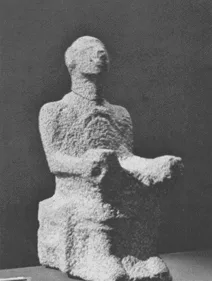
Hubal
Chief deity of polytheistic-era Mecca; cult-statue housed inside the Ka'ba; the central pantheon-tier figure of the Hijazi tribal religious complex. Per Ibn al-Kalbi (Kitab al-Asnam, the foundational Arabic-language compendium of Arabian deity-cult, early 9th c. CE), the Hubal statue was originally imported from Mesopotamia by the Quraysh chief 'Amr ibn Luhayy who established the pantheon-cult at the Ka'ba. The statue was carved of red carnelian ('aqiq) with a broken right hand replaced by a gold-prosthetic — the gold-hand-replacement detail being one of the most-distinctive iconographic features of the cult. The Hubal cult featured the istiqsam ritual: divinatory arrows (azlam) cast before the statue to determine fate, paternity-disputes, travel-decisions, and other major life-questions; the istiqsam practice was prohibited by Islamic law at the conquest (Q 5:90). The Hubal cult-statue was destroyed by Muhammad at the 630 CE Conquest of Mecca, alongside the other 360 deity-images housed inside or around the Ka'ba — the foundational Islamic monotheistic-vs-polytheistic event of the Hijazi religious transition. The Aramaic ha-Ba'l etymology (Hubal as "the Lord," Northwest-Semitic Ba'l-cult loan) supports the Ibn al-Kalbi attestation of the Mesopotamian-import origin of the cult-statue, encoding the broader polytheistic-era Hijazi religious-cultural integration with the Northwest Semitic Levantine sphere.
Domains
- divination
- fate
- war
Powers
- Answer petitions by the casting of divining-arrows
- Grant the Quraysh fortune and victory in war
- Deliver verdicts by divining-arrows
Epithets
- هبل the great idol of the Ka'ba; chief god of the QurayshIbn al-Kalbi, Kitab al-Asnam (primary)
Sources
- existence: Ibn al-Kalbi, Kitab al-Asnam (early 9th c. CE) (primary); Ibn Hisham, al-Sira al-Nabawiyya (primary); al-Tabari, Tarikh al-Rusul wa-al-Muluk (primary)