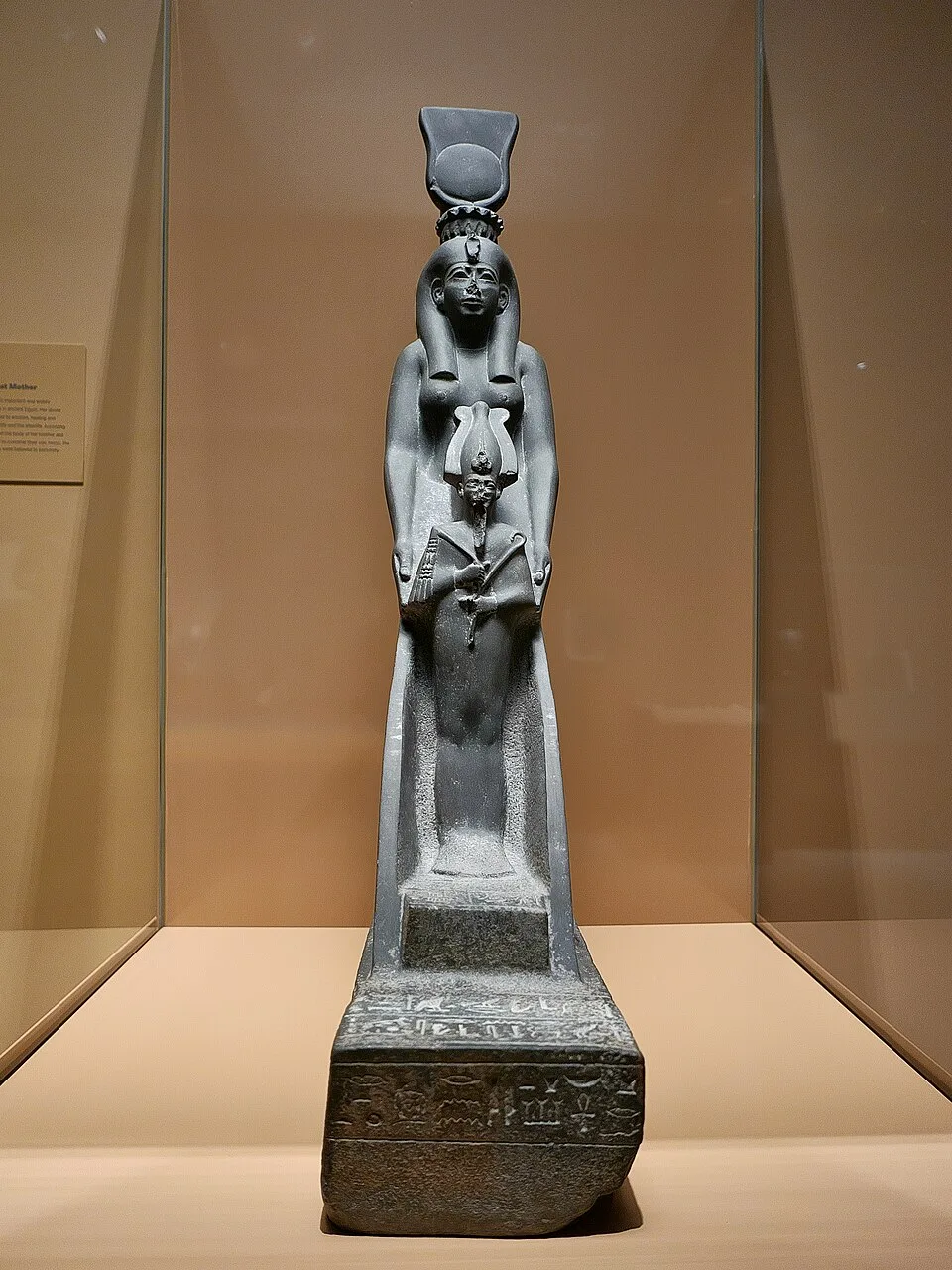
Osiris
Beja · deity · Beja traditional religion; continuing · Recorded classification
Osiris, the Egyptian lord of the dead, held a particular place in the sacred landscape of Philae through the Abaton, the 'pure mound' on the neighbouring island of Biga that was honoured as his tomb. There Isis was believed to have gathered and revived her murdered husband, and the inviolable shrine received regular libations. Because the Blemmyes and other Nubians of the frontier were the enduring patrons of the Philae cult, the Osirian mysteries of death and resurrection formed part of the religious world the Beja's ancestors sustained until the sanctuaries were closed. His figure represents the Osirian, mortuary dimension of that late frontier religion, complementary to the solar cult of Mandulis and the great-goddess cult of Isis.
Domains
- death afterlife
- rebirth
Powers
- rise renewed from death
Epithets
- Wsjr nb jꜣt-wꜥbt — Osiris, Lord of the Pure Mound (the Abaton)William Y. Adams, Nubia: Corridor to Africa (1977). (secondary)
Relations
- spouse: IsisHusband of Isis, revived by her at the Abaton.William Y. Adams, Nubia: Corridor to Africa (Princeton University Press, 1977). (secondary)
Sources
- Osiris was venerated at the Abaton on the island of Biga beside Philae, reckoned his tomb; the Osirian rites of Philae were among the cults maintained into the Blemmyan period by the Nubian and desert devotees of Isis.: Solange Ashby, Calling Out to Isis (Gorgias Press, 2020). (secondary); William Y. Adams, Nubia: Corridor to Africa (Princeton University Press, 1977). (secondary)