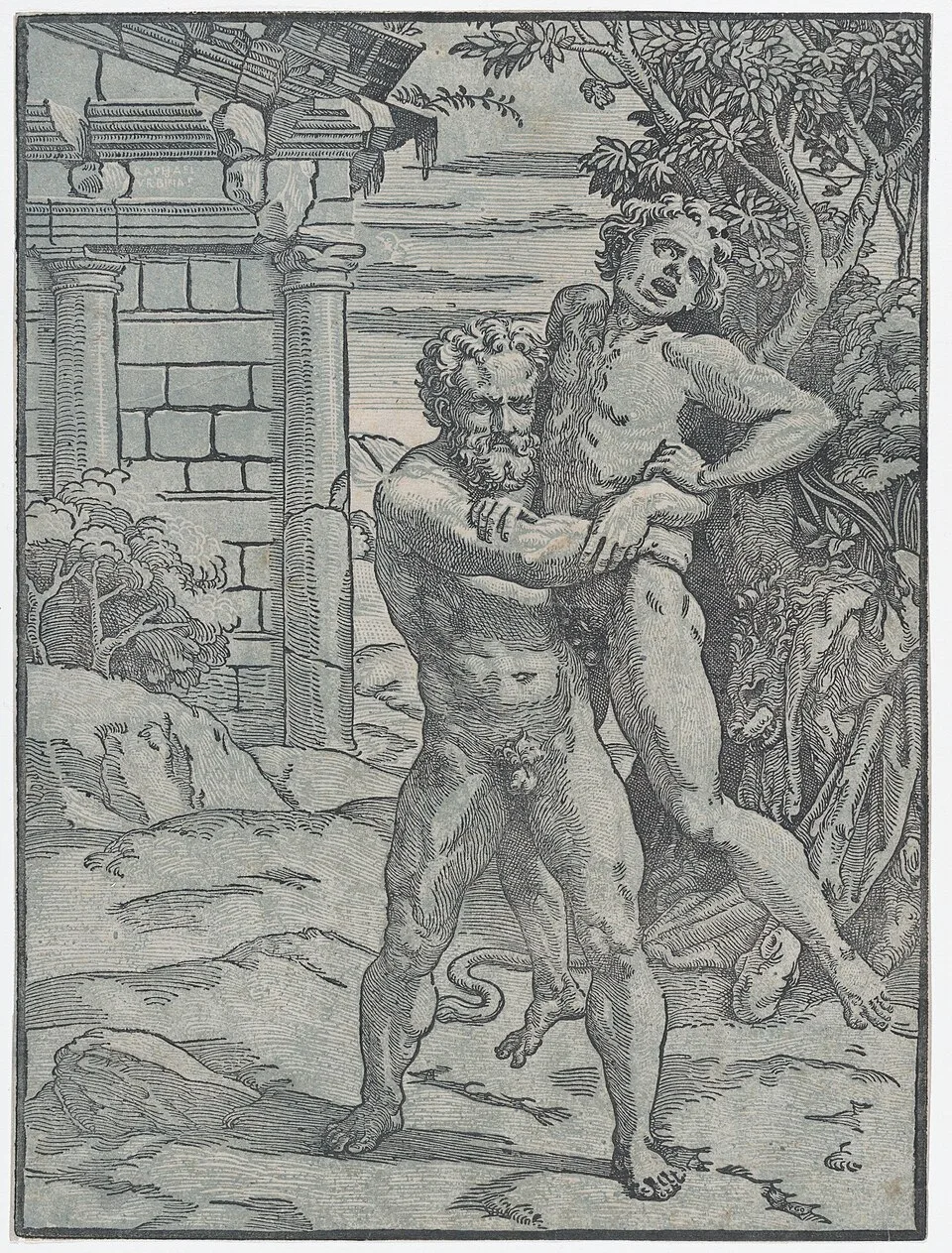
Antaeus
Berber · demigod · mythic past · Recorded classification
Libyan/Berber earth-giant Anti, known mainly through Greco-Roman sources (Pindar, Apollodorus, Plutarch) but explicitly claimed as a Berber figure (Anti) and localised at Tingis/Tangier. Son of a sea-god and Earth, so classified demigod. English plain form of the classical name leads; Berber 'Anti' in term-fields.
Domains
- earth and strength
- wrestling and combat
Powers
- renew strength by touching the earth
- compel travellers to deadly wrestling
- Renews his strength each time he touches his mother Earth
- Forces all passing strangers into a wrestling match to the death
Epithets
- Antaîos Greek form of the Libyan giant's nameApollodorus, Bibliotheca 2.5.11. (primary)
Relations
- spouse: Tinge
Sources
- Antaeus, known to the Berbers as Anti, was a Libyan giant, son of Poseidon and Gaia, who wrestled and killed travellers until Heracles lifted him off the earth (the source of his renewing strength) and crushed him.: Apollodorus, Bibliotheca 2.5.11. (reference); Bates, O. (1914). The Eastern Libyans. London: Macmillan & Co. (reference)
- His cult was localised in North Africa: Pomponius Mela makes the goddess Tinjis (eponym of Tangier) his wife, and at Tingis his giant 'bones' were shown; a Roman painting was read as the Libyan Antaeus with Berber features.: Pomponius Mela, De Chorographia 3.10; Plutarch, Sertorius 9. (reference); Bates, O. (1914). The Eastern Libyans (Berber features of the Antaeus painting). (reference)