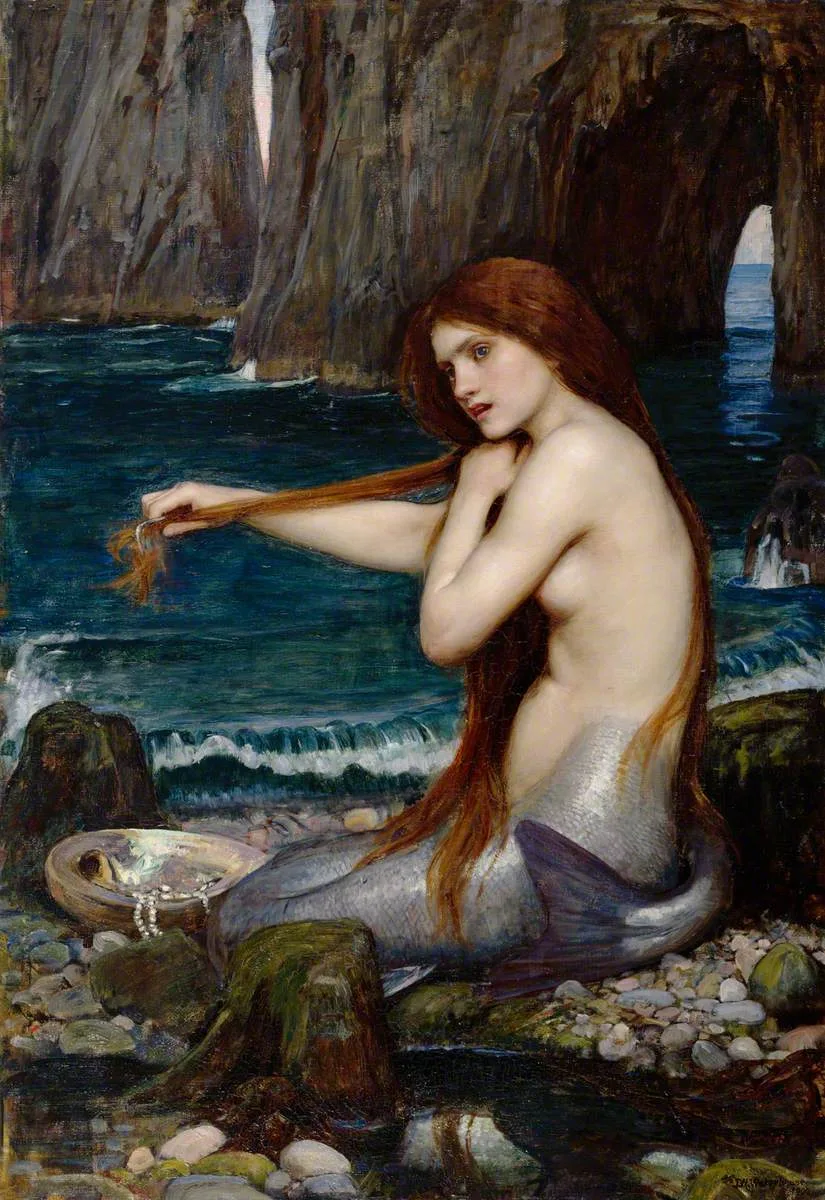
Magindara
Half-divine half-eel daughter of the Bicolano deity Asuang by an unnamed mortal woman. Sister of Oryol (the half-serpent demigoddess of the Ibalong epic). Defined in Bicolano oral tradition by her kind-and-tender-hearted character — the deliberate contrast to her cunning serpent-sister. Possessed of a beautiful voice with the dual canonical-Bicolano power to summon storms or to calm them. When asked by her father Asuang to summon storms against the human settlers of Ibalong, she refused; banished by Asuang into the sea as punishment. After her banishment, the canonical-Bicolano vicious-mermaid race emerged from the place where she was last seen, taking her name as species-eponym ("Magindara" / "aswang ng dagat"); iconographically distinguished from the original demigoddess. The kindness-and-mercy character-note and the storm-controlling vocal faculty are the defining elements of her individual-figure iconography.
Parentage
- father: AsuangBicolano oral tradition (primary)
Domains
- mermaid of storm and calm
- sea and weather
Powers
- Summons or calms storms with her beautiful voice
- Lures sailors to drown them
- Lures sailors to drown them
Relations
- father: AsuangBicolano oral tradition (primary)
- sibling: OryolHalf-eel demigoddess sister to the half-serpent demigoddess Oryol; the kind-and-tender-hearted contrast to Oryol's cunning serpent-character.Bicolano oral tradition — both daughters of Asuang (primary)
- banished by: AsuangBanished to the sea by her father for refusing to summon storms against the human settlers of Ibalong.Bicolano oral tradition (primary)
- eponym of: the Magindara-mermaid-species ("aswang ng dagat") — the canonical-Bicolano vicious flesh-eating mermaid-race that emerged in the sea where the original Magindara was last seen, taking her name as species-eponym; iconographically distinguished from the original kind-and-tender-hearted demigoddess · BicolanoBicolano oral tradition (primary)
Sources
- existence: Bicolano oral tradition (Ibalong-cycle peripheral narratives); Bicolano regional folklore archives at the National Commission for Culture and the Arts (NCCA Philippines) (primary)
- parentage: Bicolano oral tradition — daughter of Asuang (primary)