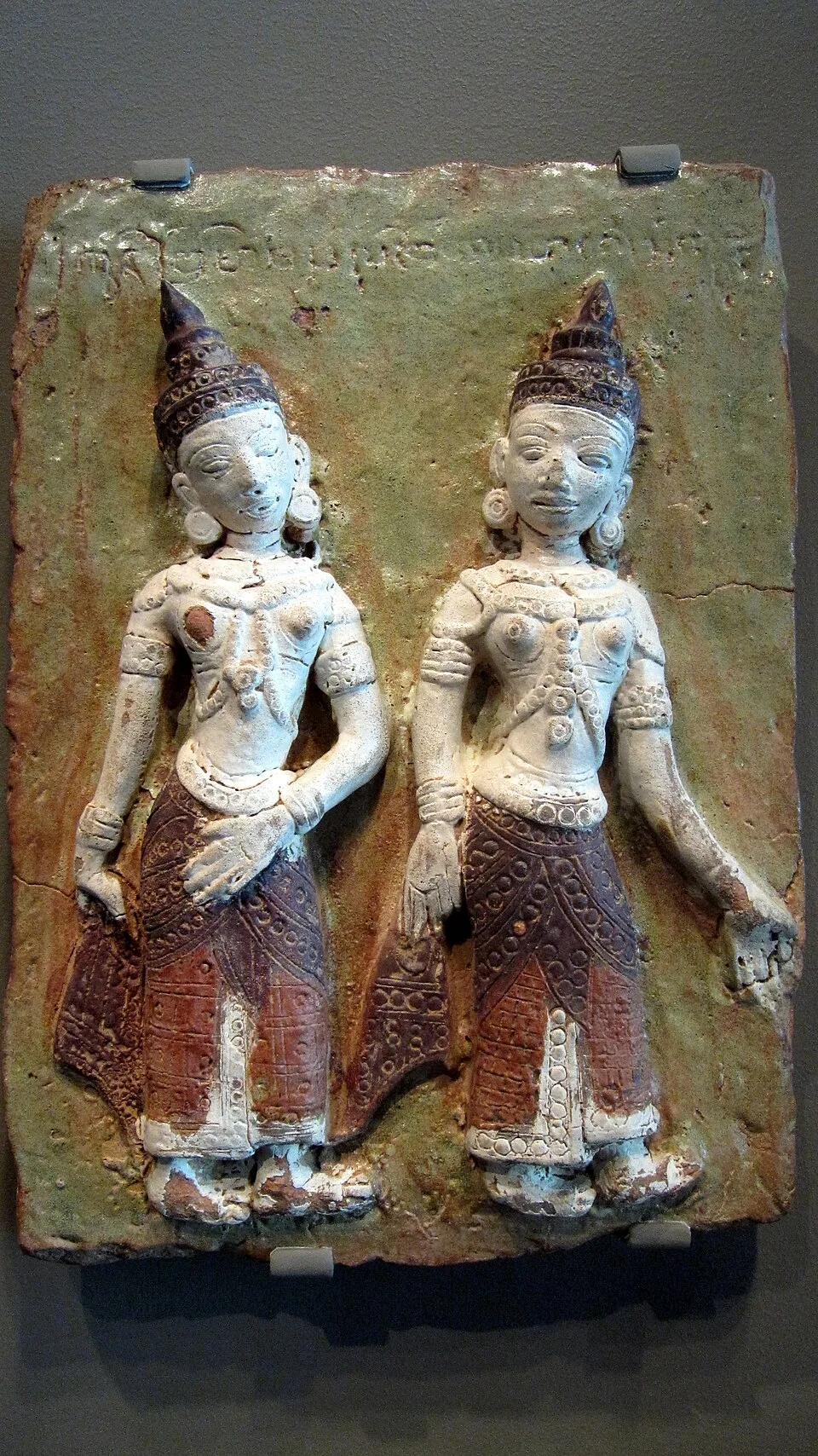
Māra
Buddhist · deity · mythic · Recorded classification
The Buddhist 'Evil One', deity of death, desire and obstruction who assails the Bodhisattva at the awakening with armies and the three daughters; ruler of the highest desire-realm heaven in some schemes.
Children
Domains
- death and the realm of desire
- temptation and delusion
Powers
- Tempt practitioners away from awakening
- Muster armies to assail the Bodhisattva
- Send seductive daughters to distract meditators
Epithets
- पापीयस् The Evil One; Māra Pāpimā, the more wickedMāra-saṃyutta, Saṃyutta Nikāya 4; Padhāna Sutta, Sutta Nipāta 3.2 (primary)
- नमुचि He who does not let go; a name of MāraPadhāna Sutta, Sutta Nipāta 3.2 (Māra addressed as Namuci) (primary)
- मृत्यु Death; Māra as the lord of deathMāra-saṃyutta, Saṃyutta Nikāya 4; standard Buddhist exegesis of the four māras (primary)
- Māra Pāpīyas 'Māra the Evil One / more wicked'Padhāna Sutta, Suttanipāta 3.2. (primary)
- Namuci 'he who does not let go', name shared with a Vedic demonPadhāna Sutta, Suttanipāta 3.2. (primary)
Relations
- enemy: PṛthivīReciprocal of buddhist_prthivi.enemy — Called to witness by the Buddha's earth-touching gesture, she routed Mara's host at the bodhimanda.Lalitavistara Sutra (primary)
- equated with: KamadevaMāra carries Kāma's bow and flower-arrows and the epithet Kāmadeva; desire's god is recast as death-and-desire personified, the adversary of awakening. Kāma's consort Rati and playful eros drop away.Aśvaghoṣa, Buddhacarita XIII.2 (Māra introduced as Kāmadeva, wielder of the flower-arrows); Lalitavistara ch. 21 (primary); T.O. Ling, Buddhism and the Mythology of Evil (1962) (secondary)
Sources
- existence: Pali Canon, Māra-saṃyutta (SN 4) (primary); Lalitavistara Sūtra (primary)