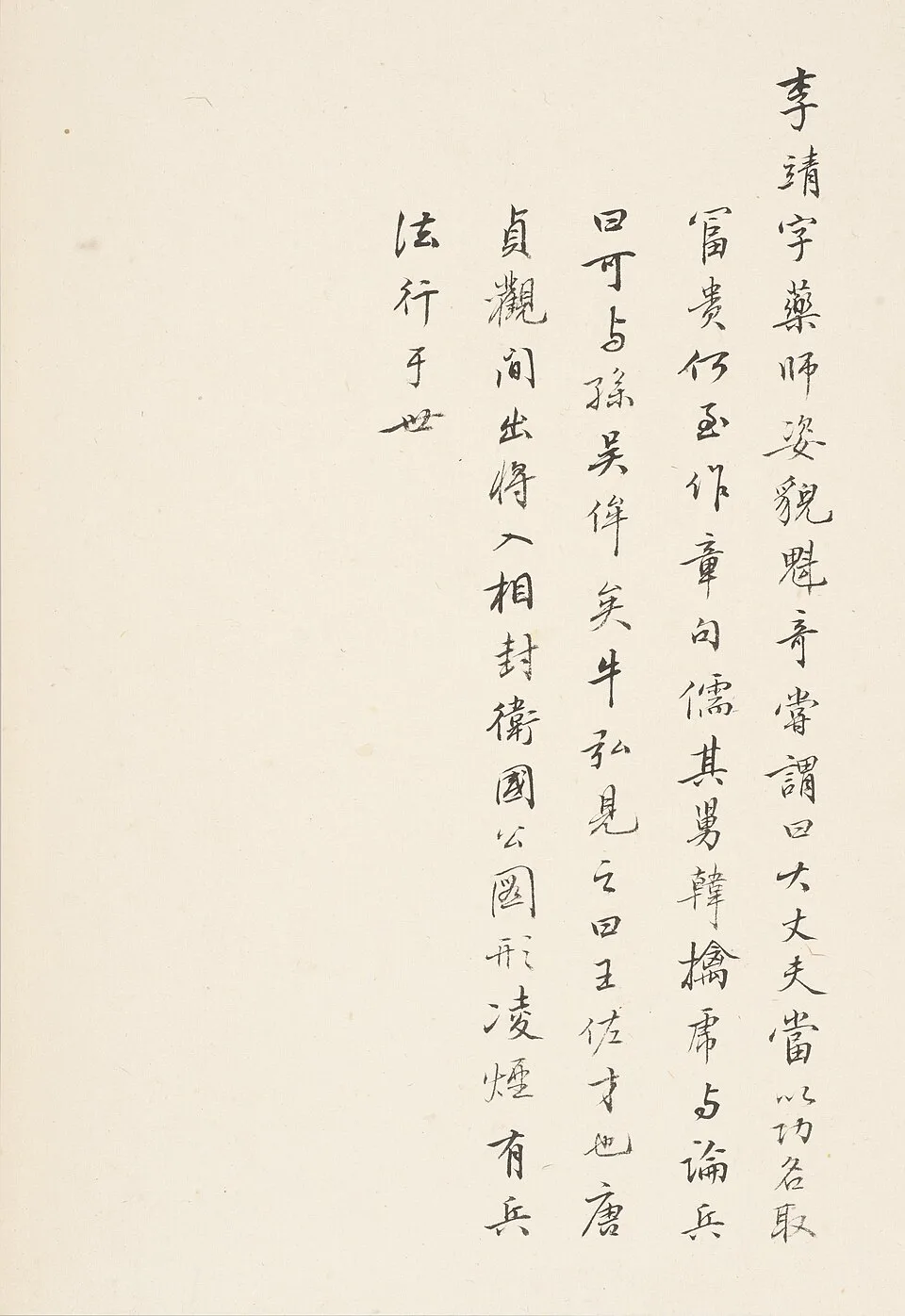
Li Jing
Chinese · deity · mythic · Recorded classification
Pagoda-Bearing Heavenly King (Tota Li Tianwang) of the Daoist celestial bureaucracy and father of Nezha. In Fengshen Yanyi he is the mortal commander of Chentang Pass who fathers Jinzha, Muzha, and Nezha by Lady Yin; after Nezha's lotus-rebirth the immortal Randeng gives him the soul-binding pagoda by which he masters his rebellious son, and he is later canonized as a Heavenly King. The figure fuses the historical Tang general Li Jing (571-649 CE) with the Buddhist guardian-king Vaisravana, whose son Nalakubara underlies the Chinese Nezha. Carried in the registry only as a name in chinese_nezha's notes ('son of Li Jing the Pagoda-Bearer') until materialized here as the paternal link.
Children
Powers
- Wield the soul-binding wish-fulfilling pagoda
- Command the armies of Heaven
Epithets
- 托塔天王 Pagoda-Bearing Heavenly King; his standing title in the Daoist celestial bureaucracy.Wu Cheng'en, Xiyouji (Journey to the West), c. 1592 (primary)
- 毘沙門天王 Vaisravana, the Heavenly King of the North; the Buddhist guardian-king with whom Li Jing the Pagoda-bearer is identified.Soothill & Hodous, A Dictionary of Chinese Buddhist Terms (1937), s.v. 毘沙門 (secondary)
Relations
- father of: NezhaFather of Nezha (and of the elder brothers Jinzha and Muzha) by Lady Yin; the father-son enmity after Nezha returns his flesh and is reborn from lotus is the core of the cycle.Xu Zhonglin, Fengshen Yanyi (Investiture of the Gods), ch. 12-14 (primary)
Sources
- existence: Xu Zhonglin, Fengshen Yanyi (Investiture of the Gods), c. 1567-1620 (primary); Wu Cheng'en, Xiyouji (Journey to the West), c. 1592 (primary)