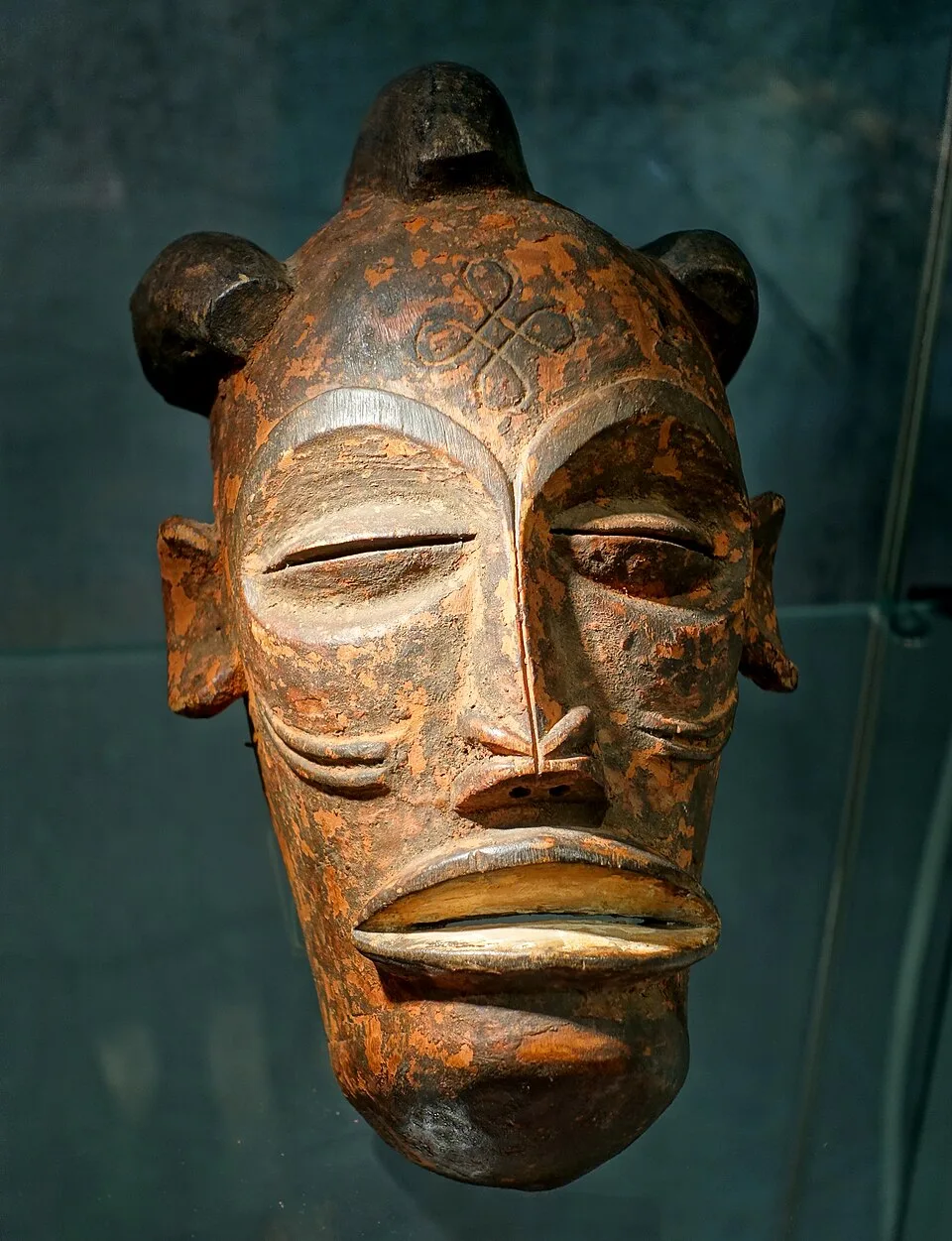
Mwana Pwo, female ancestral spirit of beauty and fertility
Mwana Pwo (often shortened to Pwo) is the female ancestral mask-spirit of the Chokwe, an archetype of mature womanhood, beauty and fertility. The name means 'young woman' (mwana 'young one' + pwo 'woman'); used alone, Pwo can denote the mature woman or a founding female ancestor, while the fuller form mwana pwo, probably elaborated under later influence, emphasises youthful feminine beauty. The mask honours the founding female ancestors, a role of particular weight because the Chokwe reckon descent through the maternal line. It is always danced by a man disguised as a woman with a fibre wig, false breasts and a skirt, who performs graceful steps to present the ideal of feminine grace and to call down fertility and prosperity on the village. Mwana Pwo is the recognised feminine counterpart of the male wealth-spirit Cihongo.
Domains
- fertility and childbirth
- ancestors and the dead
Powers
- to bring fertility and increase to the village
- to embody the ancestral ideal of feminine beauty and conduct
Epithets
- PwoMarie-Louise Bastin, Art décoratif Tshokwe (Lisbon: Companhia de Diamantes de Angola / Museu do Dundo, 1961). (secondary)
Relations
- companion: Cihongo, male spirit of wealth and chiefly powerMwana Pwo, the female ancestral spirit of beauty and fertility, is the complementary feminine counterpart to the male wealth-spirit Cihongo; the pair embodies the feminine and masculine principles of Chokwe society.Manuel Jordán, ed., Chokwe! Art and Initiation Among Chokwe and Related Peoples (Munich: Prestel, 1998). (secondary)
- subordinate to: Nzambi, the remote supreme creatorAs a mahamba embodying a founding female ancestor, Mwana Pwo belongs to the order of ancestral spirits through which the Chokwe address the remote creator.Boris Wastiau, Chokwe, Visions of Africa series (Milan: 5 Continents Editions, 2006). (secondary)
Sources
- Mwana Pwo (Pwo) is the female Chokwe ancestral mask-spirit personifying ideal womanhood, beauty and fertility, honouring the founding female ancestors and danced by a man in post-initiation masquerades.: Marie-Louise Bastin, Art décoratif Tshokwe, 2 vols. (Lisbon: Companhia de Diamantes de Angola / Museu do Dundo, 1961). (secondary); Manuel Jordán, ed., Chokwe! Art and Initiation Among Chokwe and Related Peoples (Munich: Prestel, 1998). (secondary)