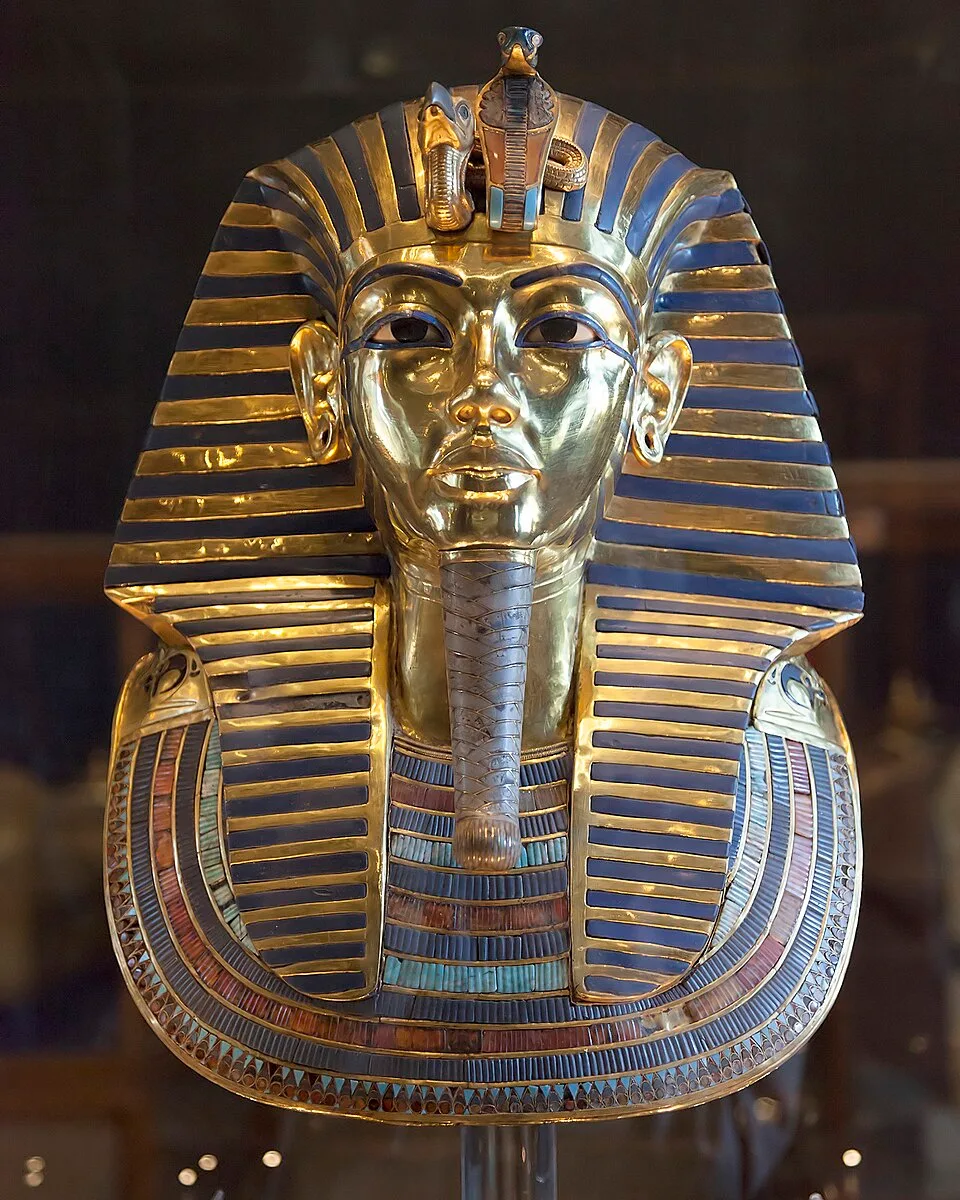
Tutankhamun
Egyptian · mortal · new kingdom · Recorded classification
The boy-pharaoh, son of Akhenaten (KV55 DNA paternity, Hawass et al. 2010). Born Tutankhaten during the Aten revolution; restored the cult of Amun, changed his name to Tutankhamun, and married his half-sister Ankhesenamun. Died in his late teens c. 1323 BCE; his near-intact tomb (KV62), found by Howard Carter in 1922, made him the most famous pharaoh. Authored as mortal (a historical 18th-Dynasty royal, per the historical-human rule), matching the corpus's treatment of Nefertiti and Tiye. His mother is the KV35 'Younger Lady', a sister of Akhenaten not registered in the corpus and not Nefertiti, so only the paternal edge is wired.
Parentage
- father: Akhenaten
Domains
- kingship
- religious restoration
Powers
- Restores and re-endows the temples of the gods
Epithets
- Nebkheperure ('Lord of the manifestations of Ra')Tutankhamun's throne-name in his royal titulary (KV62) (primary)
- Living image of Amun (twt-ꜥnḫ-ı͗mn)Tutankhamun's nomen; Restoration Stela (Karnak) (primary)
Relations
- sibling: MeritatenHalf-sister; both children of Akhenaten (Tutankhamun by the KV35 'Younger Lady', Meritaten by Nefertiti).Dodson & Hilton, The Complete Royal Families of Ancient Egypt (2004) (secondary)
- sibling: MeketatenHalf-sister; both children of Akhenaten.Dodson & Hilton, The Complete Royal Families of Ancient Egypt (2004) (secondary)
- sibling: AnkhesenamunHalf-sister and also his queen — both children of Akhenaten; she became his Great Royal Wife (see spouse relation).Hawass et al., JAMA 303.7 (2010); inscriptions of KV62 naming Ankhesenamun (primary)
- spouse: AnkhesenamunHis half-sister Ankhesenamun (formerly Ankhesenpaaten) was his Great Royal Wife; their only known children were two stillborn daughters buried with him.Objects from KV62 naming Ankhesenamun as Great Royal Wife; royal reliefs of the pair (primary)
Sources
- existence: Tomb of Tutankhamun (KV62), Howard Carter excavation 1922; the Restoration Stela (Karnak); Hawass et al., 'Ancestry and Pathology in King Tutankhamun's Family,' JAMA 303.7 (2010): 638–647 (primary); Nicholas Reeves, The Complete Tutankhamun (Thames & Hudson, 1990) (secondary); Aidan Dodson & Dyan Hilton, The Complete Royal Families of Ancient Egypt (Thames & Hudson, 2004) (secondary)
- parentage: Hawass et al., JAMA 303.7 (2010): 638–647 (KV55 = Akhenaten = father; KV35 'Younger Lady' = mother) (primary)