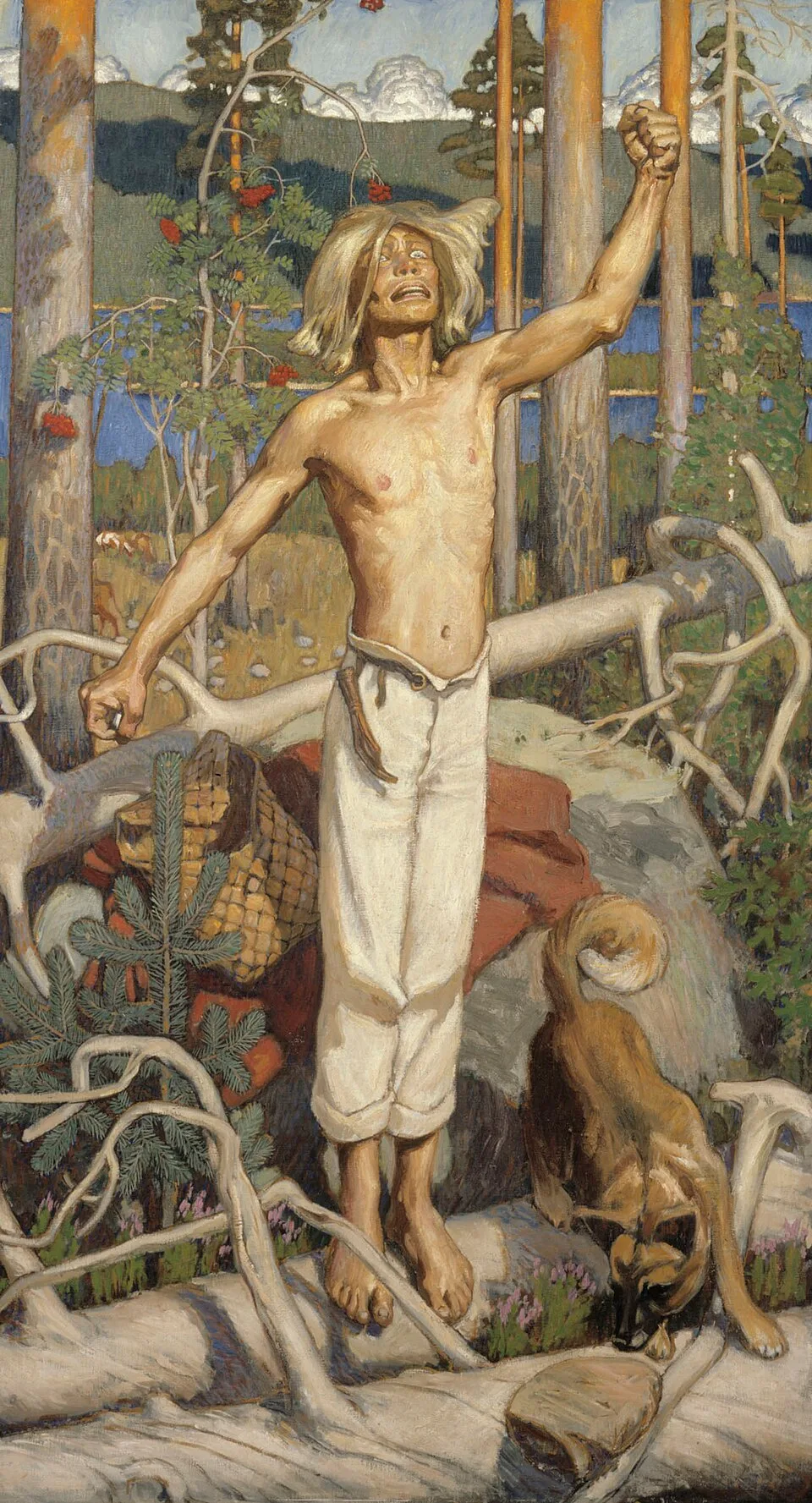
Kullervo
Tragic-slave-warrior of the Kalevala; son of Kalervo (mortal Karelian-tribal chief) and an unnamed mortal mother. Born during the canonical Kalervo-Untamo blood-feud — Untamo (Kalervo's brother) had massacred Kalervo's family except the pregnant mother and the unborn Kullervo, who was raised in slavery in Untamo's household. Demonstrated preternatural strength as an infant (broke his cradle, broke the swaddling-clothes); Untamo attempted to kill him through multiple means (drowning, burning, hanging) but the child survived all attempts. Sold into slavery to Ilmarinen, where his destructive labor-failures (the cattle-herd Kullervo was tasked with herding was transformed by his curse into wolves and bears that killed Ilmarinen's wife) caused further tragedy. Returning to his ancestral homeland, encountered an unknown maiden whom he seduced — discovering only after the act that she was his long-lost sister, separated from him in childhood by the Kalervo-Untamo feud; the sister threw herself into the river to her death upon recognition. After avenging Kalervo's family by killing Untamo, returned to find his ancestral home empty and his entire family dead, and fell on his own sword in the canonical-Finnish suicide-of-the-tragic-hero. The Kullervo-cycle is the most-extensively-tragic episode of the Kalevala and a foundational influence on subsequent Finnish-and-European tragic-literary tradition: J. R. R. Tolkien's "The Story of Kullervo" (1914-1915) was an early influence on the Túrin Turambar tragedy of The Silmarillion; Jean Sibelius's Kullervo Symphony Op. 7 (1892) is the foundational Finnish-national-romantic symphonic work and was the breakthrough composition that established Sibelius as the central Finnish national composer.
Parentage
- father: Kalervo
Powers
- Exert preternatural strength
- Sing beasts from the forest
Relations
- enemy: Untamo
- father: Kalervo
- enemy: IlmarinenSold as serf to the smith; when the smith's wife baked a stone into his bread he sent wolves and bears to tear her apart.Kalevala (Lonnrot 1849), Runos 31-33 (primary)
Sources
- existence: Elias Lönnrot, Kalevala (1849 New Kalevala) Cantos 31-36 (primary); Honko 1990; Siikala 2002 (secondary)