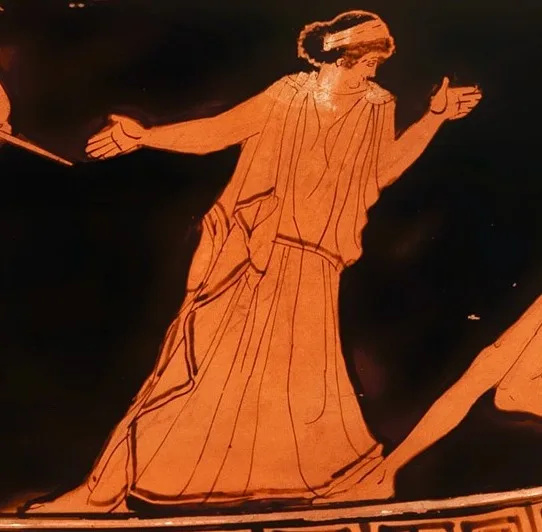
Leto
Greek · deity · primordial · Recorded classification
Titaness daughter of Coeus, mother of Apollo and Artemis by Zeus.
Parentage
- father: CoeusHesiod, Theogony 404–409 (primary)
- mother: PhoebeHesiod, Theogony 404–409 (primary)
Children
Domains
- motherhood and modesty
Powers
- Bears Apollo and Artemis on wandering Delos
- Gentle protectress and nurturer of the young
- Avenges insult to her honour through her children
Epithets
- Λητὼ Φυτίη 'Leto the Engenderer/Planter' — cult-title at Phaestus in Crete, in the Leukippos myth of sex-changeAntoninus Liberalis, Metamorphoses 17 (primary)
- Λητοῖ Leto worshipped as the great mother-goddess at the Letoon, the federal Lycian sanctuaryLetoon trilingual inscription (Xanthos) (primary)
- Κοιογένεια daughter of CoeusCallimachus, Hymn to Delos (primary)
- κυανόπεπλος dark-robedHesiod, Theogony (primary)
Relations
- sibling: HecateFull sibling — shares the same attested parentage (Coeus & Phoebe) per the figures' cited genealogy.
- interpretatio: WadjetHdt calls the cobra-goddess of Buto 'Leto', as nurse-protector of Apollo-Horus on the floating island Chemmis. Preserves the divine-child protection; breaks on Wadjet's uraeus kingship-emblem role.Herodotus, Histories 2.155-156 (oracle of Leto at Buto) (primary)
- equated with: LadaThe Lycian national mother (eni mahanahi) was identified with Leto at the Letoon, anchoring the Greek Leto-in-Lycia myth. Preserves mother-of-the-divine-twins; the native goddess is a general mother-of-gods.T. R. Bryce, The Lycians in Literary and Epigraphic Sources (1986), on the Letoon (secondary)
- father: CoeusHesiod, Theogony 404–409 (primary)
- mother: PhoebeHesiod, Theogony 404–409 (primary)
- counterpart of: LatonaTradition-specific counterpart; this link does not transfer parentage.Hyginus, Fabulae, Preface; Hesiod, Theogony 918–920 (primary)
- counterpart of: LetoThe hymn addresses this deity in an Orphic ritual context; Greek genealogy is not imported.Orphic Hymns, 34 (Thomas Taylor numbering; modern hymn 35) (primary)
Sources
- existence: Hesiod, Theogony 406, 918 (primary)