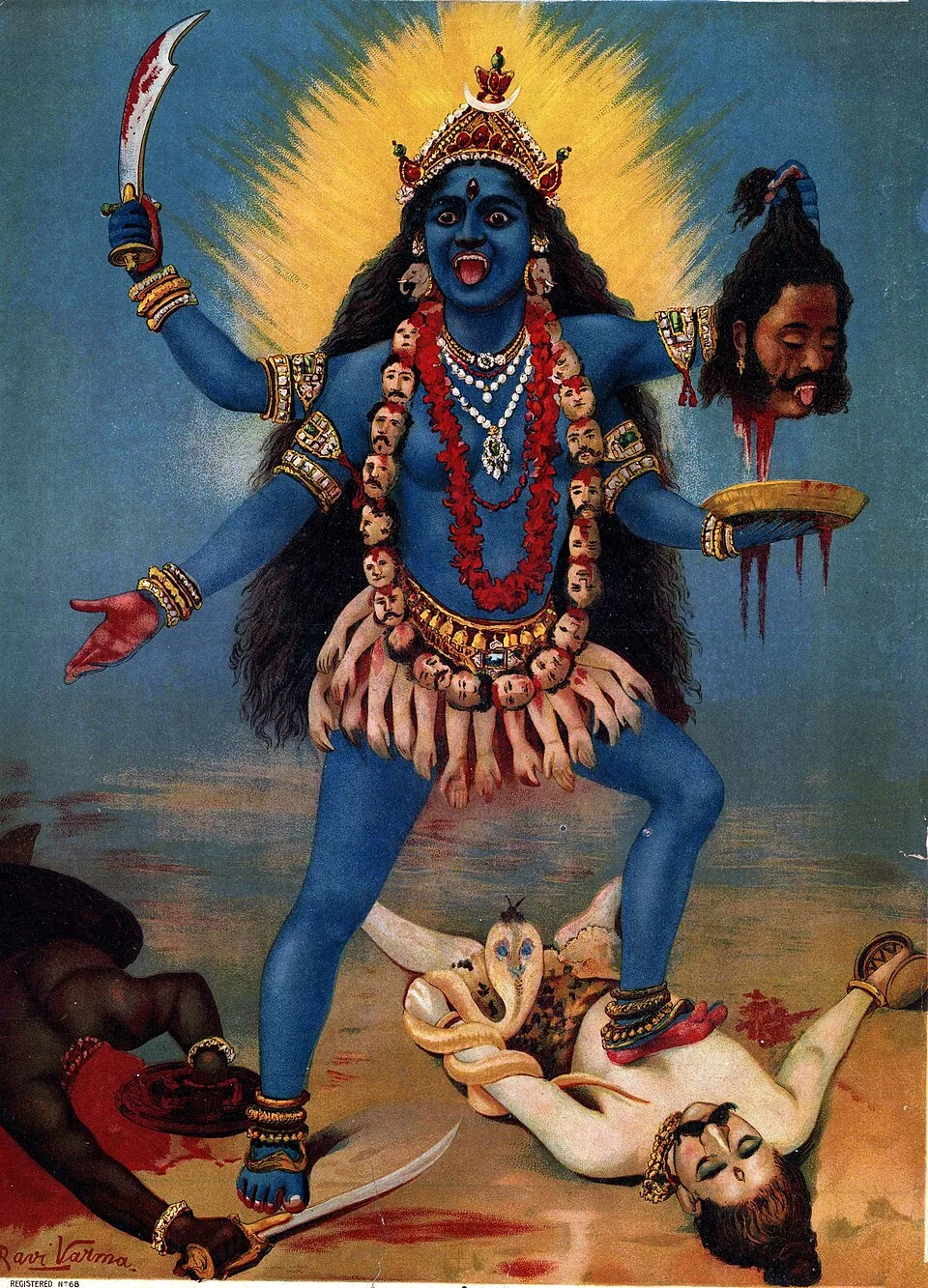
Kali
Hindu · deity · mythic · Recorded classification
Fierce dark goddess of time and dissolution, slayer of Raktabija
Variant accounts
- manifestationIn Shiva Purana 2.2.32 Mahakali emerges from the other half of the hair cluster that produces Virabhadra. This named portrayal does not replace other goddess-origin accounts.Shiva Purana 2.2.32.20–25, 45–58, Virabhadra manifestation and commission (primary)
Domains
- destruction
- time
Powers
- Drink the demon's blood before it spawns new demons
- Spring forth fully formed from another goddess's wrath
Epithets
- महाकाली The Great Kālī, goddess of time and dissolutionDevī Māhātmya (Durgā Saptaśatī), prefatory Mahākālī hymn (primary)
- चामुण्डा Slayer of the demons Caṇḍa and MuṇḍaDevī Māhātmya 7 (slaying of Caṇḍa and Muṇḍa), Mārkaṇḍeya Purāṇa (primary)
- दक्षिणाकाली The southern Kālī; the benign Tantric formKālī Tantra tradition; D. Kinsley, Hindu Goddesses (1986) (secondary)
Relations
- interpretatio: Palden LhamoReciprocal of tibetan_palden_lhamo.interpretatio — Her name Śrīdevī and iconography (mule, flayed-skin saddle, skull-cup, disease-goddess retinue) come from the Indian Kālī/Cāmuṇḍā complex; Tibet makes her national protectress of the Dalai Lamas.René de Nebesky-Wojkowitz, Oracles and Demons of Tibet (1956), ch. on dPal-ldan lha-mo, tracing her to the Indian Śrīdevī/Kāladevī circle of Kālī-type goddesses (secondary)
Sources
- existence: Devi Mahatmya (Markandeya Purana) (primary)