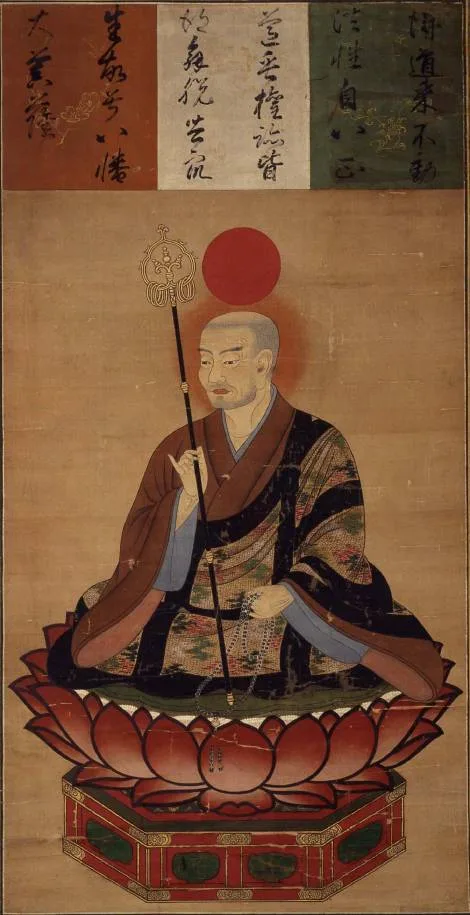
Hachiman
Japanese · deity · kofun and medieval deification · Recorded classification
Japanese war-and-archery deity, identified by tradition as the deified 15th Emperor Ōjin. Cult-center at Usa Hachimangū in Kyushu (founding) and Iwashimizu Hachimangū in Kyoto (imperial-recognized, 859 CE). Tutelary kami of the Minamoto warrior clan from the 11th century onward; their genealogical descent from Emperor Ōjin made Hachiman their ujigami. Father of Minamoto no Yoshiie under the Mongán-pattern medieval-literary divine-paternity claim preserved in the Heike Monogatari and the Hachimantarō-naming. Currently second only to Inari in the number of dedicated shrines across Japan (~25,000).
Children
Domains
- war and archery
- tutelary of warriors and imperial protection
Powers
- Sends the divine wind (kamikaze) that scatters invading fleets
- Extends divine protection over the nation and warriors
- Sends the divine wind that scatters invading fleets
- Delivers oracles declaring the divine will
- Protects the realm and grants victory to warriors
- Issues oracles declaring the divine will
Epithets
- 八幡大菩薩 Great Bodhisattva Hachiman; his shinbutsu-shūgō Buddhist titleHeian-period shinbutsu-shūgō; the 781 CE bodhisattva title at Usa Hachimangū (secondary)
- 誉田別命 Hachiman identified as the deified Emperor ŌjinNihon Shoki 日本書紀 (Emperor Ōjin); shrine tradition of Usa Hachimangū (primary)
- 弓矢八幡 Hachiman of the Bow and Arrow; tutelary god of warriorsMinamoto clan war-cult; medieval samurai veneration (Iwashimizu Hachimangū) (secondary)
Relations
- father of: YoshiieThe Mongán-pattern medieval-literary divine-paternity claim. Yoshiie's biological father was the historical Minamoto no Yoriyoshi (mortal samurai); the divine-paternity tradition is the literary-theological reframing that the Heike Monogatari and the Hachimantarō-naming preserve.Heike Monogatari; Mutsu Waki; medieval-literary tradition treating Yoshiie as son or avatar of Hachiman (primary)