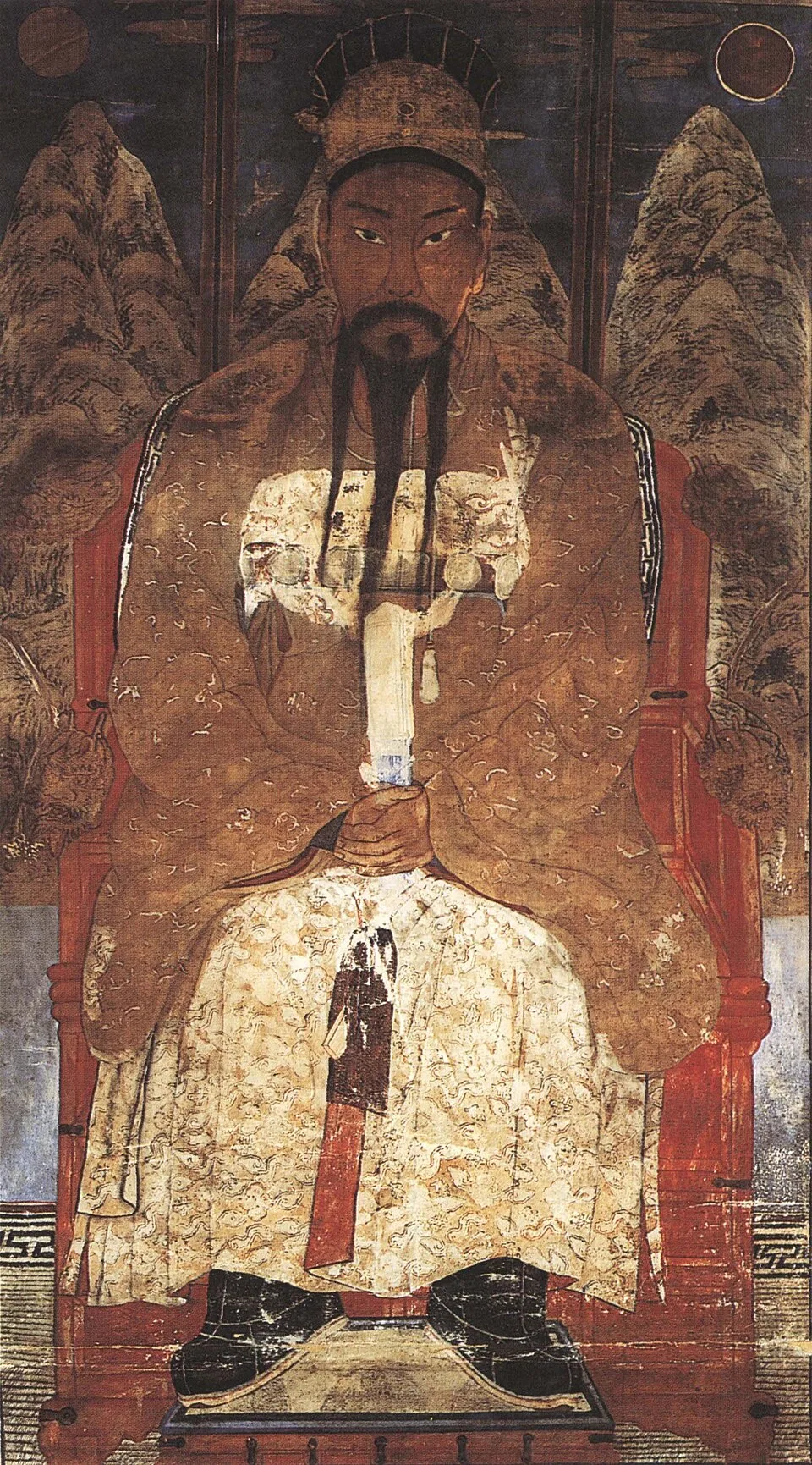
Tangun Wanggeom
Korean · demigod · mythic prehistoric · Recorded classification
Son of Hwanung and the bear-woman in the Samguk yusa, and founder of Gojoseon. The narrative distinguishes his fifteen-hundred-year reign from his age of 1,908 when he becomes the mountain god of Asadal.
Parentage
Variant accounts
- source review correctionThe legacy statement conflates the reign and age and adds an unsupported interpretive trope.Iryeon, Samguk yusa, book 1, Gojoseon entry (primary)
Domains
- foundation of Korean nation Gojoseon
- mountain spirit sansin
Powers
- Live for many centuries without dying
Epithets
- 檀君王儉 Sandalwood-Lord Wanggeom; founder of GojoseonSamguk Yusa 三國遺事 (Memorabilia of the Three Kingdoms, 1281 CE), Gi-i ch. (primary)
- 檀帝 Emperor Dangun; honorific imperial form in modern DaejongismDaejonggyo (대종교) tradition venerating Dangun as national progenitor (secondary)
Sources
- existence: Samguk Yusa Book 1 (Iryeon, 1281 CE — the earliest extant Tangun source, citing the now-lost Gogi/Old Record and a now-lost Wei chronicle); Jewang Ungi (Yi Seunghyu, 1287 CE — the second early Tangun source); Sejong Sillok Jiriji (1454 CE) and the Joseon-period historical chronicles continuing the Tangun-as-foundational-figure tradition (primary)
- parentage: Samguk Yusa Book 1 (primary)
- Son of Hwanung and the bear-woman in the Samguk yusa, and founder of Gojoseon. The narrative distinguishes his fifteen-hundred-year reign from his age of 1,908 when he becomes the mountain god of Asadal.: Iryeon, Samguk yusa, book 1, Gojoseon entry (primary)