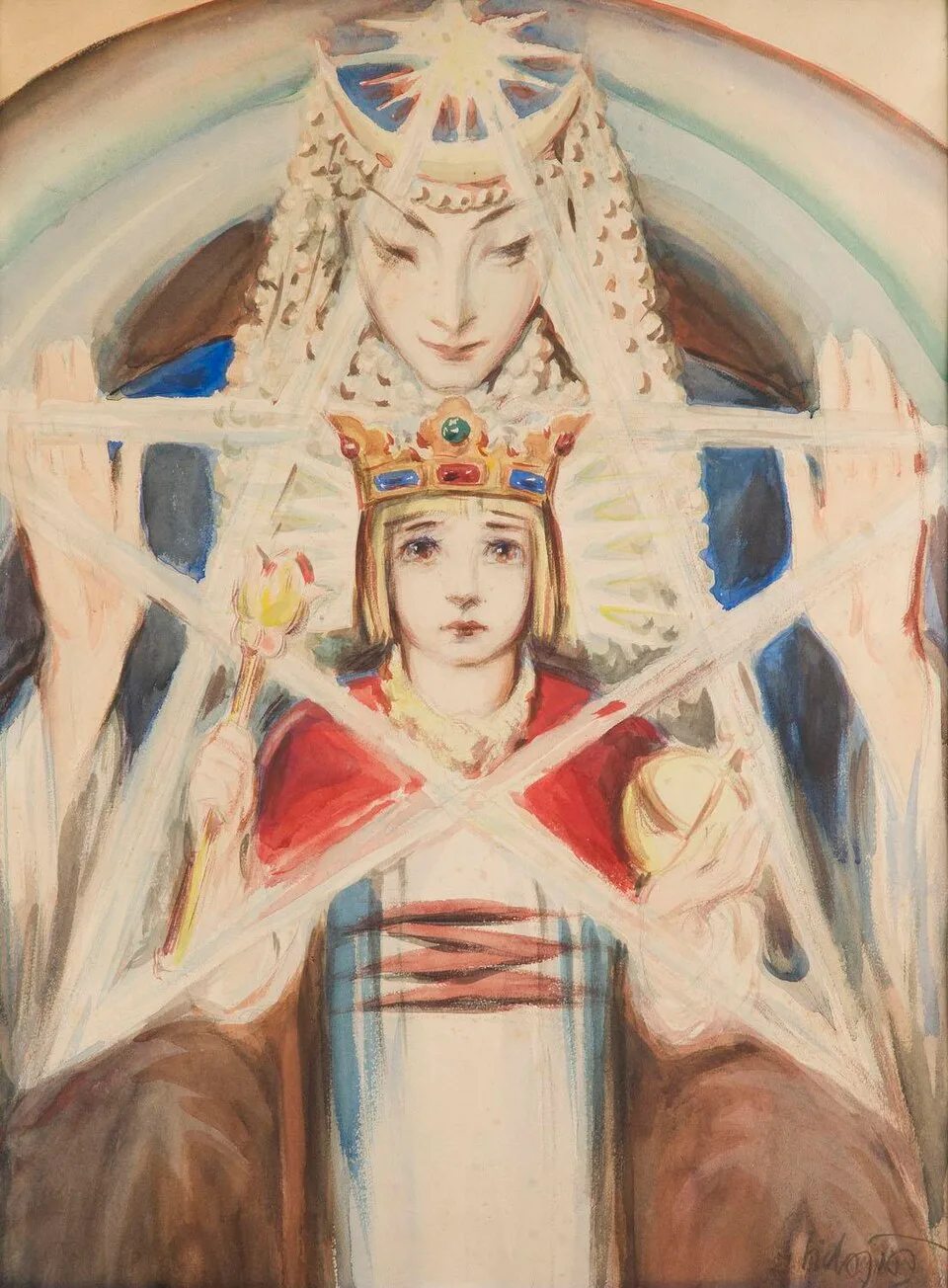
Gilgamesh
Historical fifth king of Uruk (c. 2750 BCE — accepted as historical by virtually all Mesopotamian-studies scholars; Stephanie Dalley dates the lifetime "between 2800 and 2500 BCE"; Tummal Inscription 1953-1920 BCE is the earliest direct attestation). Demigod son of the named goddess Ninsun by the historical king Lugalbanda (mortal at conception, posthumously deified from the Ur III period). Built the great walls of Uruk (still visible as 9-km circuit at modern Warka). The Epic of Gilgamesh is the oldest surviving great work of literature in any language — the Standard Babylonian recension by Sîn-lēqi-unninni (c. 1300-1000 BCE) preserves the most complete transmission. Friendship with Enkidu, Cedar Forest expedition and Humbaba-killing, rejection of Ishtar, Bull of Heaven killing, Enkidu's death, immortality-quest journey to Utnapishtim, the Flood-narrative reception, the lost rejuvenation-plant, return to Uruk and final death — the structural arc of confronting and accepting mortality through the loss of the beloved is the foundational meditation on grief and human finitude in world literature. Standard Babylonian I.48 gives the unique "two-thirds divine, one-third mortal" arithmetic — a Mesopotamian literary convention that has been read as either: (a) a poetic expression of his disproportionate divine inheritance from Ninsun; (b) a dual-paternity reading where the Sumerian King List's "lillu-phantom lord of Kulaba" is biological father and Lugalbanda legal/social, summing to 2 of 3 divine parents. The strict-criterion classification under the registry is ½ demigod (one named pantheon parent + one mortal parent at conception). Posthumously made underworld-judge per the Death of Bilgames and Standard Babylonian Tablet XII. Rediscovered for modern Western readership in 1849 when Austin Henry Layard excavated Ashurbanipal's library at Nineveh; the eleven-tablet Akkadian text was first translated by George Smith in 1872, whose presentation of the Flood narrative to the Society of Biblical Archaeology caused a scholarly sensation that reshaped Old Testament studies.
Parentage
- maternal: Ninsun
- paternal: Lugalbanda
Children
Domains
- kingship of Uruk
- underworld judgeship
Powers
- long life
- Judge the netherworld dead
- Project terrifying radiance
- Exert superhuman strength
Epithets
- šar tamḫāri King of battle; the mighty warrior-king of Urukcf. the King of Battle epic tradition; Gilgamesh epic (his martial renown) (secondary)
- šūtur eli šarrī Surpassing all (other) kings; the opening praise of the heroStandard Babylonian Gilgamesh I.29 (šūtur eli šarrī) (primary)
- dayyān eṭemmī Judge of the ghosts/dead; deified Gilgamesh, magistrate of the underworldThe Death of Gilgamesh; underworld incantations (Gilgamesh as judge) (primary)
Relations
- beloved: Enkidu (the wild-man companion of Gilgamesh, created by Aruru from clay to be his match) · MesopotamianEnkidu (mortal, created by the gods from clay to challenge Gilgamesh) entry pending. The defining male-friendship pair of Mesopotamian literature.Standard Babylonian Epic of Gilgamesh I-XII (primary)
- father of: Ur-NungalUr-Nungal, his son and successor at Uruk (reigned 30 years per the Sumerian King List); already carries Gilgamesh as parent.Sumerian King List (primary)
Sources
- existence: Sumerian King List (postdiluvian First Dynasty of Uruk, fifth king after Enmerkar, Lugalbanda, Dumuzid the Fisherman); Tummal Inscription (1953-1920 BCE — 34-line text, the earliest historical attestation); Sumerian Bilgames cycle (Bilgames and Akka, Bilgames and Huwawa, Bilgames and the Bull of Heaven, Death of Bilgames) c. 21st-c. BCE redaction; Old Babylonian Epic of Gilgamesh c. 1800 BCE; Standard Babylonian Epic of Gilgamesh (Sîn-lēqi-unninni redaction c. 1300-1000 BCE), eleven tablets preserved at Ashurbanipal's library, Nineveh; the Pennsylvania, Yale, and Megiddo tablets (primary)
- parentage: Standard Babylonian Epic of Gilgamesh I.34 ("Son of Lugalbanda... Son of the lofty cow, the wild cow Ninsun"); Sumerian King List (primary)