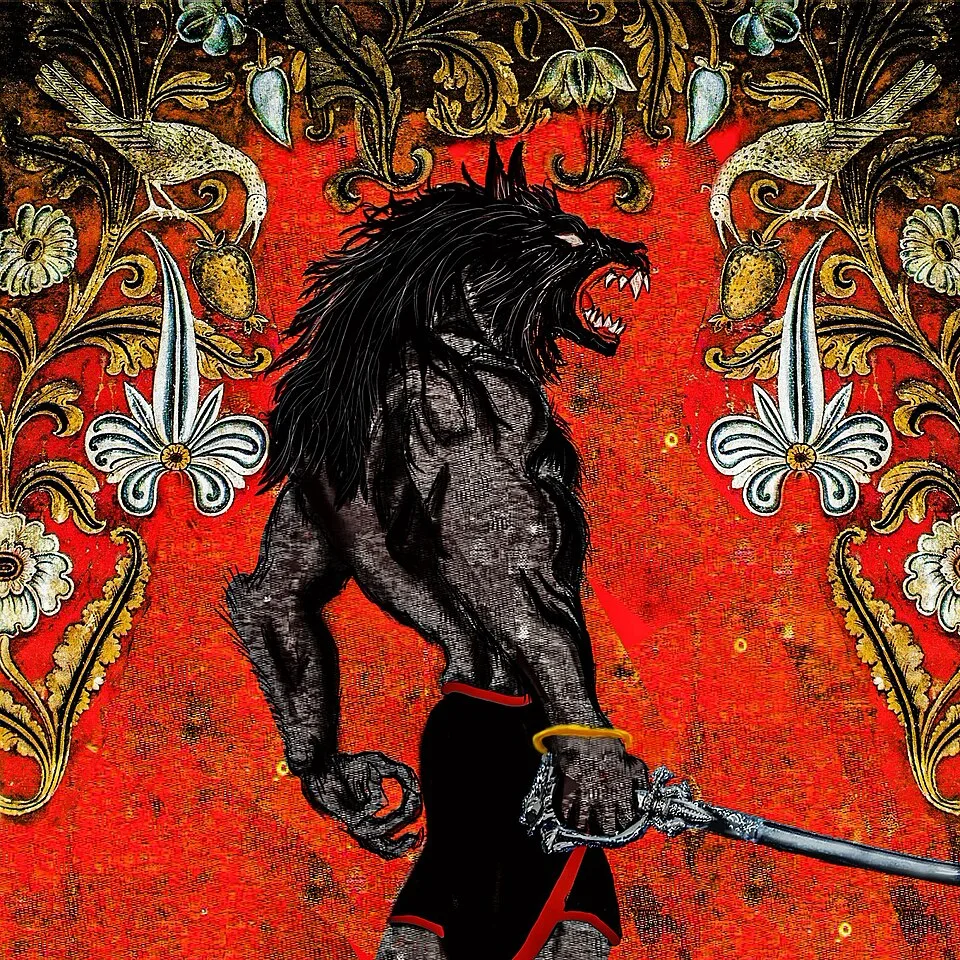
Mahasona, the great graveyard demon
Sinhala folk yakku · deity · Sinhala folk yakku traditional religion; continuing · Recorded classification
Mahasona is the pre-eminent demon (yaka) of the lowland Sinhala-Buddhist village pantheon, his name meaning 'the great demon of the cemetery.' In the standard origin legend he was once the giant Jaya Sena, who, after being decapitated in a duel with the warrior Gotaimbara, was restored to life with the head of a bear and became lord of the cremation grounds. He is held to strike travellers who pass burial-grounds at unlucky hours, leaving the mark of his hand on the shoulder and visiting fever and wasting upon his victims. The cure is the great exorcism known as the Mahasohon Samayama, in which masked dancers impersonate the demon through the night until, appeased with offerings of meat and blood, he releases the patient by dawn.
Domains
- graveyards and cremation grounds
- affliction and disease
Powers
- to strike a person down by crushing the shoulder
- to inflict illness on the living by his malign look
Epithets
- මහ සොහොන් යකා (Maha Sohon Yaka)Dandris de Silva Gooneratne, 'On Demonology and Witchcraft in Ceylon,' Journal of the Ceylon Branch of the Royal Asiatic Society 4, no. 13 (1865-66): 1-117. (secondary)
Relations
- rival: Riri Yaka, the blood demonMahasona and Riri Yaka are paired in the demonological hierarchy as the two most feared graveyard yakku, Riri being ranked immediately below Mahasona; both haunt cremation grounds and are propitiated together in cemetery exorcisms.Paul Wirz, Exorcism and the Art of Healing in Ceylon (Leiden: E. J. Brill, 1954). (secondary)
Sources
- Mahasona (Maha Sohona) is the great graveyard demon of lowland Sinhala folk religion, the most feared of the yakku, propitiated in the night-long yaktovil exorcism to cure the illness he inflicts.: Bruce Kapferer, A Celebration of Demons: Exorcism and the Aesthetics of Healing in Sri Lanka (Bloomington: Indiana University Press, 1983). (secondary); Paul Wirz, Exorcism and the Art of Healing in Ceylon (Leiden: E. J. Brill, 1954). (secondary)