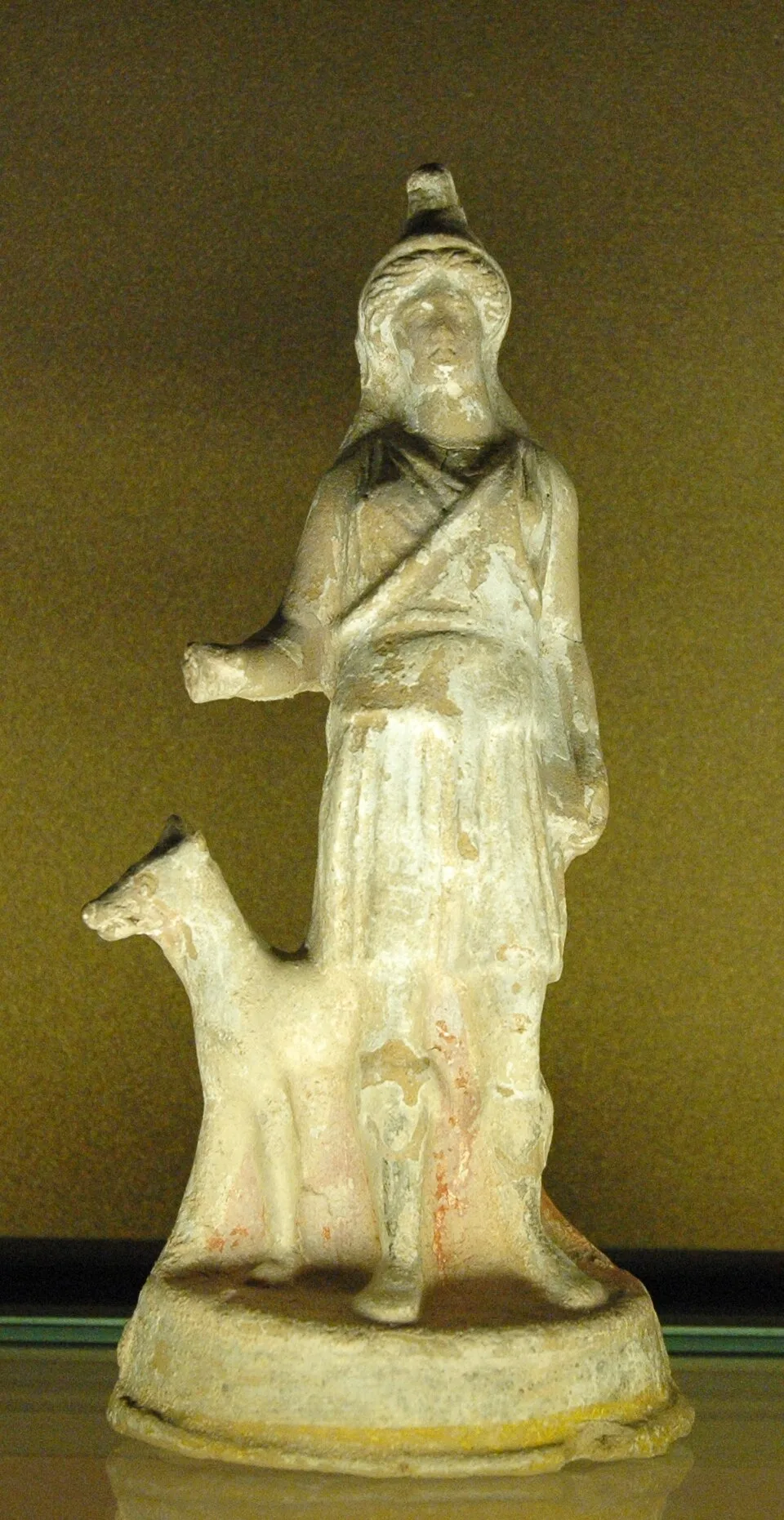
Bendis the Two-Speared Huntress
Thracian · deity · Classical Thrace; cult at Athens/Piraeus from c. 430 429 BCE · Recorded classification
Great Thracian goddess. Native theonym attested only in Greek script (Βένδις, var. Μένδις). At Athens syncretized with Artemis, Hekate and Selene but maintained a separate temple and festival, marking her as a distinct foreign goddess. The 'two spears' are her defining attribute.
Domains
- the hunt
- moon and night
Powers
- hunts wielding two spears
Epithets
- δίλογχος 'Two-speared' — Cratinus' epithet of Bendis the huntressCratinus, fr. 85 K-A (Thraittai) (primary)
- Βένδις Thracian goddess whose Athenian festival (Bendideia) at Piraeus opens Plato's RepublicPlato, Republic 327a-328a (primary)
Relations
- interpretatio: ArtemisReciprocal of greek_hesiod_artemis.interpretatio — Hdt names Artemis among Thrace's three gods; lexicographers gloss Bendis as Thracian Artemis. Preserves the huntress with spears; Athens nonetheless gave Bendis her own Bendideia, not Artemis's cult.Herodotus, Histories 4.33, 5.7 (primary); Hesychius, Lexicon s.v. Βενδῖς (primary)
Sources
- Bendis is a Thracian huntress-and-moon goddess given an official Athenian cult, with a sanctuary at the Piraeus and the state festival Bendideia (first held 429 BCE), famous for its nighttime mounted torch-race.: Plato, Republic 327a-328a (primary); Britannica, 'Bendis' (secondary)
- Her name is generally derived from PIE *bhendh- 'to bind', suggesting an original function over marital/communal bonds before her hunt-and-moon profile dominated in Greek reception.: Standard etymological treatments of Bendis (< *bhendh- 'bind'), e.g. summarized in Theoi.com, citing Hellenistic lexica (secondary)