Umay
Uzbek · deity · Uzbek traditional religion; continuing · Recorded classification
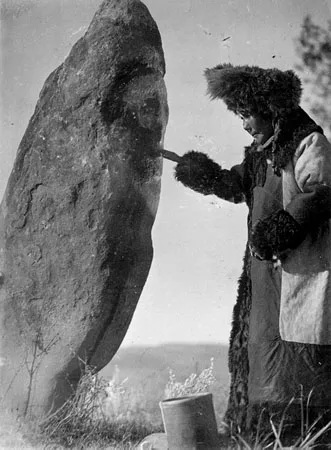
Umay is the Turkic mother-goddess presiding over the womb, childbirth, and the protection of infants, her name being the Old Turkic word for the placenta. Named beside Tengri in the eighth-century Orkhon inscriptions and paired with him as his female counterpart, she persisted across the Islamic centuries in Central Asian domestic ritual, where she guards mothers and the newborn through the vulnerable first forty days. In the Uzbek sphere her cult is largely submerged beneath Islamic patron-figures, yet ethnographers record her as an underlying protective power set against the child-stealing demoness Albasti.
Domains
- motherhood fertility
- childbirth
Powers
- protect women in childbed and the newborn
- bestow fertility and soul upon the child
Epithets
- Umay ene — Mother UmayBasilov, V. N. Shamanstvo u narodov Srednei Azii i Kazakhstana. Moscow: Nauka, 1992. (secondary)
Relations
- spouse: TangriIn Turkic cosmology Umay is paired with the sky-god as his consort and complement.Roux, Jean-Paul. La religion des Turcs et des Mongols. Paris: Payot, 1984. (secondary)
Sources
- Umay is the ancient Turkic mother-goddess of the womb, birth, and infants, attested from the Orkhon inscriptions and surviving in Central Asian, including Uzbek, folk belief.: Tekin, Talat. A Grammar of Orkhon Turkic. Bloomington: Indiana University, 1968. (secondary); Dyrenkova, N. P. 'Umai v kul'te tureckikh plemen.' Baku, 1928. (secondary); Basilov, V. N. Shamanstvo u narodov Srednei Azii i Kazakhstana. Moscow: Nauka, 1992. (secondary)