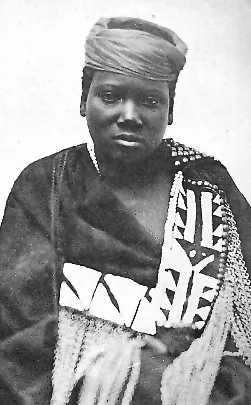
uNongqawuse
Nongqawuse (c.1841-1898) was a young woman of the Gcaleka Xhosa whose prophecy set in motion the Great Cattle-Killing of 1856-1857. By the Gxarha River near the sea she reported meeting strangers who declared themselves messengers of the ancestral dead: if the people would slaughter all their cattle and destroy their standing grain, the ancestors would rise, new and unblemished herds and grain would appear, and the dead would return to drive out the colonists. Carried forward by her uncle and guardian, the diviner Mhlakaza, and endorsed by the paramount chief Sarhili, the prophecy led to the destruction of vast numbers of cattle and the deaths of tens of thousands from the ensuing famine. She became one of the most enduring and contested figures of Xhosa history, remembered variously as a deluded girl, a tragic prophet, and a symbol of catastrophe.
Domains
- prophecy
Powers
- relays the message of the risen ancestors
Relations
- companion: uMhlakazaHer paternal uncle and guardian, the diviner who carried her prophecy to the chiefs.J.B. Peires, The Dead Will Arise (Johannesburg: Ravan Press, 1989) (secondary)
Sources
- Nongqawuse (c.1841-1898) was a young Gcaleka prophetess whose visions at the Gxarha River in 1856 launched the Great Xhosa Cattle-Killing, in which the ancestors were said to return if the people slaughtered their herds and destroyed their crops.: J.B. Peires, The Dead Will Arise: Nongqawuse and the Great Xhosa Cattle-Killing Movement of 1856-7 (Johannesburg: Ravan Press, 1989) (secondary); J.B. Peires, 'The Central Beliefs of the Xhosa Cattle-Killing', Journal of African History 28, no. 1 (1987) (secondary)