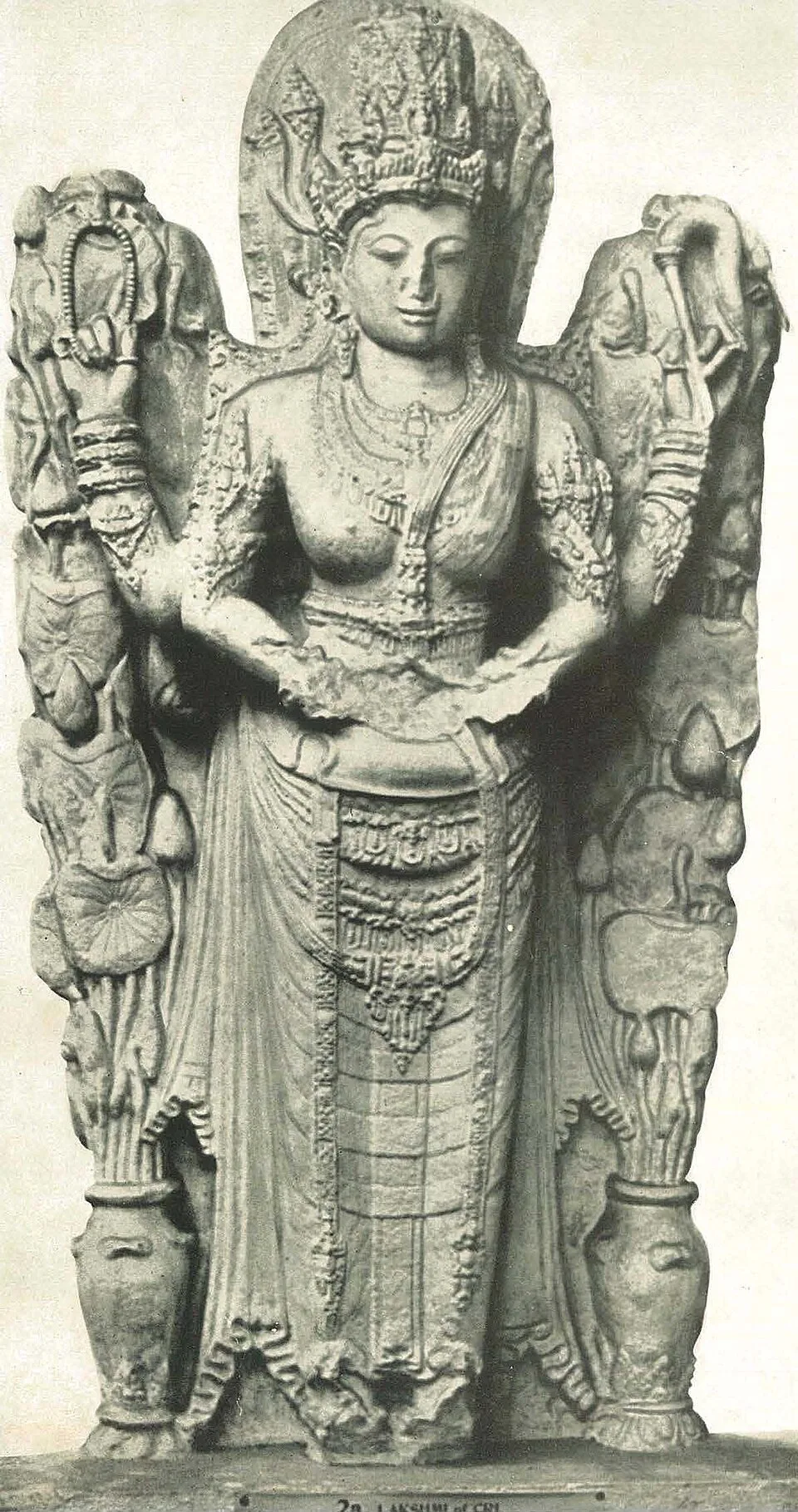
Rice Goddess
Balinese · deity · agrarian ritual present · Recorded classification
Cross-tradition figure; the Sundanese version (Nyi Pohaci Sanghyang Asri) is given a separate Sundanese entry. Here she is treated as the Balinese rice goddess.
Domains
- rice and fertility
- household prosperity
Powers
- makes the rice ripen and multiply in field and granary
Epithets
- ᬦᬶᬦᬶᬧᬦ᭄ᬢᬸᬦ᭄ 'Grandmother Rice-Stalk' — the rice goddess in the fieldsBalinese agrarian ritual tradition (secondary)
Relations
- sibling: God of Wealth
- syncretism: LakshmiThe name and consort-of-Viṣṇu link come from Śrī-Lakṣmī, but the Indonesian figure is overwhelmingly a rice-soul goddess born from the dying-deity (Tiwawa-type) myth — agrarian content the Indian Lakṣmī lacks.Old Javanese texts rendering Śrī as Wiṣṇu's consort and rice goddess (primary); P.J. Zoetmulder, Old Javanese-English Dictionary (1982), s.v. 'Śrī'; Robert Wessing, 'Sri and Sedana and Sita and Rama', Asian Folklore Studies 49 (1990) (secondary)
- equated with: Rice GoddessReciprocal of sundanese_nyi_pohaci.equated-with — Nyi Pohaci Sanghyang Asri is the Sundanese form of the pan-Indonesian rice goddess Sri: same rice-from-her-grave origin myth. Sunda Wiwitan keeps her central; Bali folds her into Hindu ritual.K.A.H. Hidding, Nji Pohatji Sangjang Sri (diss. Leiden, 1929); Robert Wessing, 'Sri and Sedana and Sita and Rama', Asian Folklore Studies 49 (1990) (secondary)
Sources
- Dewi Sri is worshipped across Bali (and Java) as goddess of rice, fertility and prosperity, identified with Hindu Śrī-Lakshmi and central to the agricultural ritual cycle.: Covarrubias, Miguel (1937). Island of Bali. New York: Knopf. (secondary); Wessing, Robert (1990). 'Sri and Sedana and the Spirits in the House,' Asian Folklore Studies 49(2): 235-258. (secondary)