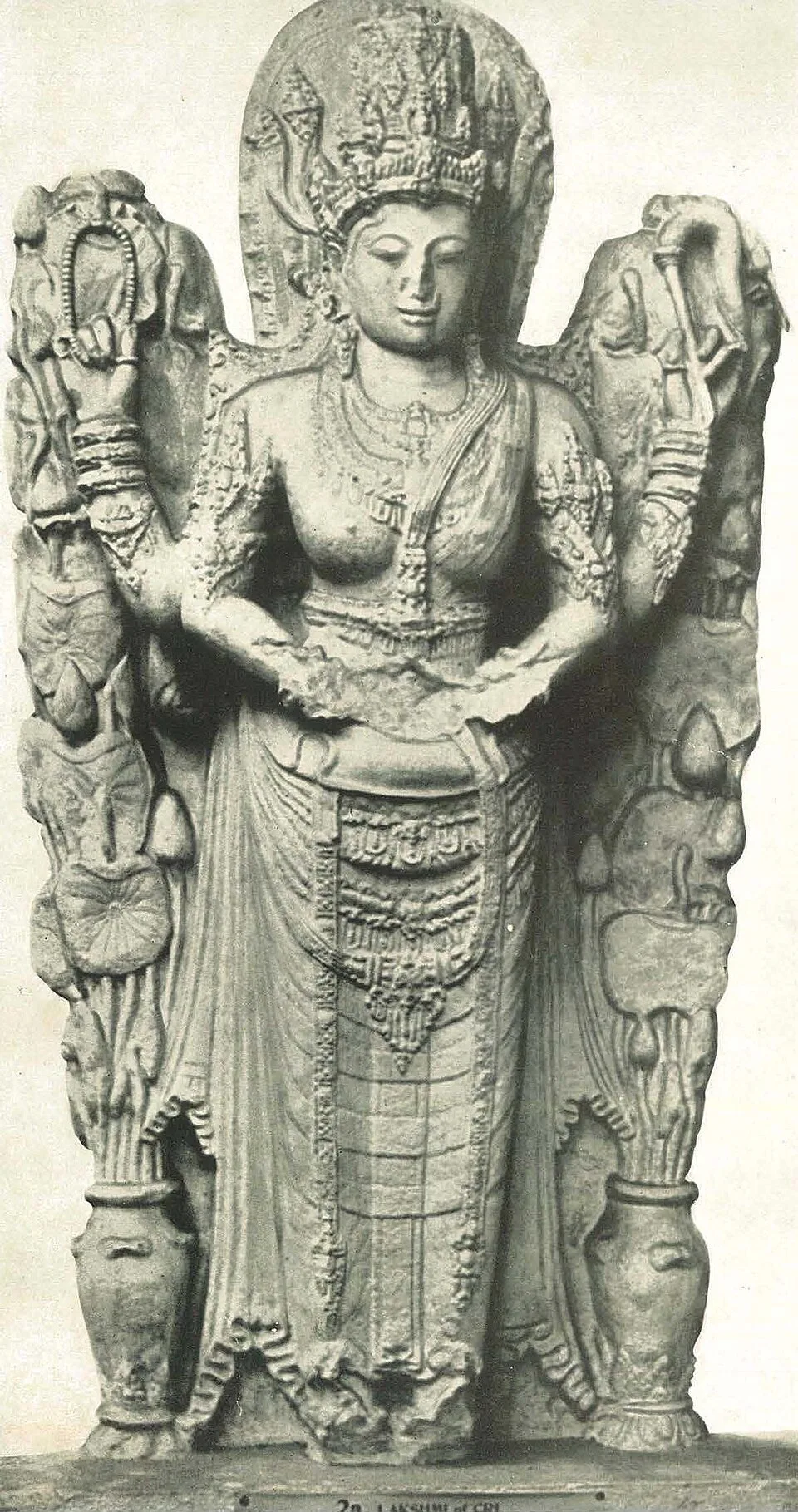
Rice Goddess
Sundanese · deity · mythic creation; perennial agrarian · Recorded classification
Sundanese counterpart of the Balinese/Javanese Dewi Sri, given a distinct entry per the brief (the Balinese Dewi Sri is balinese_dewi_sri). The 'dying-and-transforming maiden' motif is the classic Hainuwele-type origin-of-staple-crops myth.
Domains
- rice and agriculture
- fertility of the soil
Powers
- transforms in death into the first rice and food-crops
Epithets
- Nyi Pohaci Sanghyang Asri The rice-goddess; the beloved giver of the sustaining grainSundanese tradition; the Wawacan Sulanjana (secondary)
- Nyai Pohaci Sanghyang Asri Lady Pohaci, the Sacred Asri (rice-spirit)Wawacan Sulanjana (Sundanese rice-origin manuscript) (secondary)
Relations
- ally: Prince Hero of PajajaranReciprocal of sundanese_mundinglaya.ally — Slain on his sky-quest for the Layang Salaka Domas, the prince was revived by the rice goddess.Pantun Mundinglaya di Kusumah (Sundanese oral epic) (primary)
- equated with: Rice GoddessNyi Pohaci Sanghyang Asri is the Sundanese form of the pan-Indonesian rice goddess Sri: same rice-from-her-grave origin myth. Sunda Wiwitan keeps her central; Bali folds her into Hindu ritual.K.A.H. Hidding, Nji Pohatji Sangjang Sri (diss. Leiden, 1929); Robert Wessing, 'Sri and Sedana and Sita and Rama', Asian Folklore Studies 49 (1990) (secondary)
Sources
- Nyi Pohaci Sanghyang Asri is the Sundanese rice-and-fertility goddess (the Sundanese Dewi Sri), from whose buried body rice and other crops first grew in the origin myth.: Hidding, K.A.H. (1929). Nji Pohatji Sangjang Sri. Leiden: Dubbeldeman. (secondary); Wessing, Robert (1990). 'Sri and Sedana and the Spirits in the House,' Asian Folklore Studies 49(2): 235-258. (secondary)