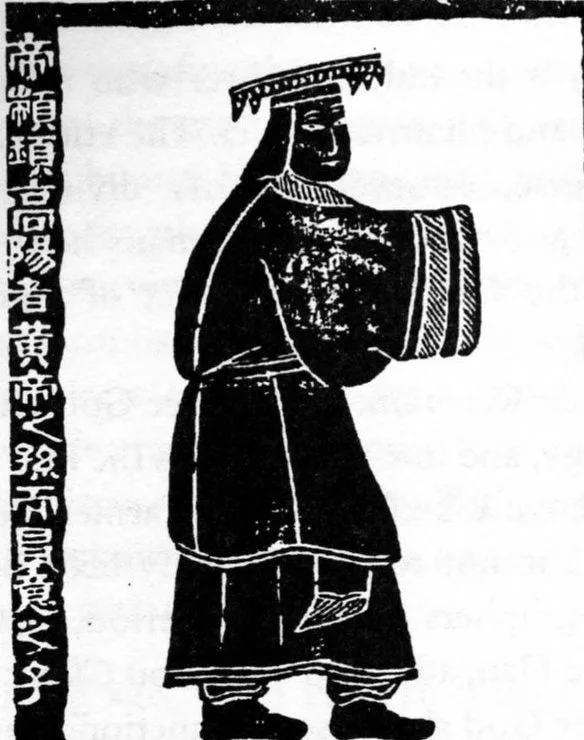
Zhuanxu
Second of the Wu Di (Five Emperors) per the Shiji canonical-historical framework; grandson of Huangdi and Leizu through the paternal line (Huangdi → Changyi → Zhuanxu); descendants include Gun and Yu the Great per several lineage-traditions. The "separation of heaven and earth" (jue di tian tong) reform attributed to him in the Guoyu and Shanhaijing — restricting direct human-spirit communication to the sovereign and his designated shaman-officials, displacing the primordial-shamanism of all-ranks-communication — is one of the foundational acts of Chinese imperial-religious-political consolidation: the sage-king centralization of religious authority that became the institutional template for the imperial-state ritual-religious framework. The Chong-and-Li figures (the spirit-officials commanded to "cut the road" between heaven and earth) became iconographic ancestors of the imperial-state ritual-officials class. K. C. Chang (1983) treats the Zhuanxu reform as the foundational political-religious act establishing the sovereign-shaman exclusive communication that anchored the Bronze-Age Chinese state-formation.
Parentage
- paternal: Changyi
Powers
- Severs communication between heaven and earth
Epithets
- 高陽氏 of the Gaoyang clanSima Qian, Shiji, 'Annals of the Five Emperors' (primary)
Sources
- existence: Sima Qian, Shiji Ch. 1 (primary); Guoyu / Discourses of the States (4th c. BCE) (primary); Shanhaijing (primary)