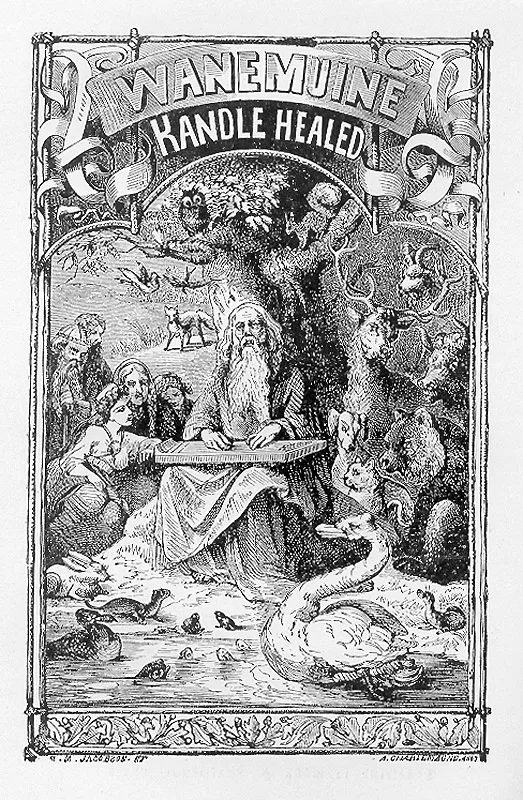
Song God
Estonian · deity · legendary · Recorded classification
Estonian song-god. English 'Song God' leads; native Vanemuine in term. IMPORTANT scholarly caveat: Vanemuine is largely a learned 19th-c. literary creation (Faehlmann, then Kreutzwald), reshaping Finnish Väinämöinen; included per the registry's request but flagged as pseudomythology per Ants Viires. His instrument is the kannel (Estonian kantele).
Domains
- song and music
Powers
- sing all creatures into song
Relations
- equated with: VäinämöinenReciprocal of finnish_vainamoinen.equated-with — Documented literary derivation, not folk cognate: Faehlmann's song-god Vanemuine remakes Finnish Väinämöinen for Estonian pseudo-mythology (1840s); folklorists since Loorits flag the fabrication.F. R. Faehlmann, Esthnische Sagen (Verhandlungen der Gelehrten Estnischen Gesellschaft, 1840s) (primary); O. Loorits, Grundzüge des estnischen Volksglaubens (1949-57) (secondary)
Sources
- Vanemuine is the Estonian god of song, music and dance, presented as the divine singer who inspires the national epic.: F. R. Faehlmann, Estnische Sagen, 1840s (secondary); Estonian mythology, Wikipedia (tertiary)
- Scholarship (e.g. Ants Viires) classes Vanemuine and the systematised Estonian high-god pantheon as 19th-century 'pseudomythology' largely lacking root in genuine folk belief; the name reworks Finnish Väinämöinen.: Ants Viires, 'Pseudomythology in Estonian Publicity in the 19th and 20th Century', 1990s (secondary); Felix Oinas / U. Masing on the birth of Vanemuine (Estonian pseudo-mythology) (secondary)