Turms
Etruscan · deity · archaic · Recorded classification
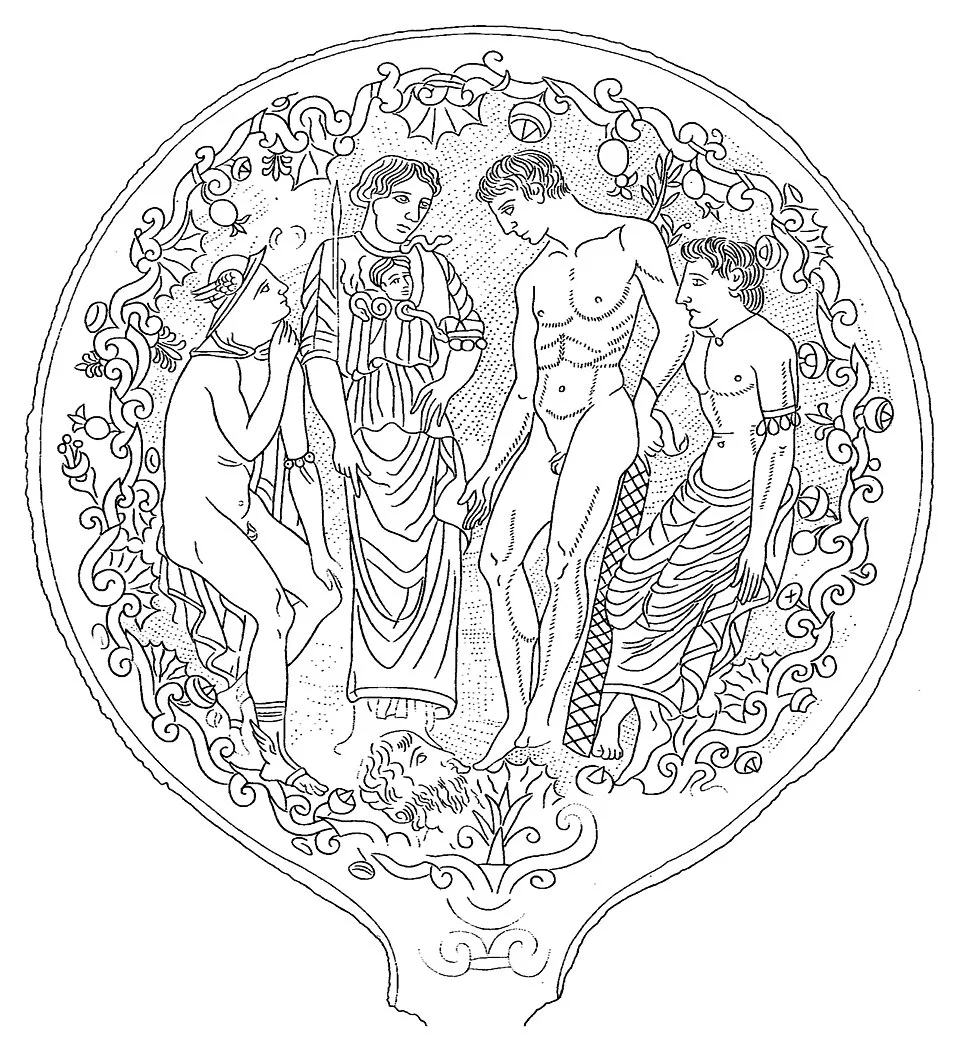
Etruscan messenger and psychopomp; the direct visual-and-functional intermediary between Greek Hermes and Roman Mercurius. The François Tomb at Vulci depicts him conducting souls in the canonical Etruscan funerary scene; Etruscan mirrors transmit the Hermes-iconography (kerykeion, petasos, wing-footed sandals) directly to Rome via the Etruscan visual-arts tradition.
Domains
- messenger of the gods
- psychopomp conducting souls
Powers
- Conduct souls to the underworld
Epithets
- 𐌕𐌖𐌓𐌌𐌑 𐌀𐌉𐌕𐌀𐌑 Turms 'of Aita/the Underworld' — psychopomp aspect in tomb-paintingTomba dell'Orco II (Tarquinia), painted label (primary)
Relations
- equated with: MercuriusTurms is the Etruscan precursor of Roman Mercurius via the same cult-evolution layer.Capitoline Triad transmission scholarship; Beard, North & Price, Religions of Rome (1998); Cornell, The Beginnings of Rome (1995) (secondary)
- equated with: HermesTurms is the Etruscan parallel to Greek Hermes; transmitted via Etruscan-to-Roman cult-evolution into Roman Mercurius. The Etruscan psychopomp role is preserved in the funerary iconography of Etruscan painted tombs.Standard interpretatio Graeca/Romana scholarship; Beard, North & Price, Religions of Rome (1998); Wissowa, Religion und Kultus der Römer (1912) (secondary); Hesiod, Theogony 938–939 (primary)
- interpretatio: HermesBonfante 1986 (primary); Hesiod, Theogony 938–939 (primary)
- interpretatio: MercuriusEtruscan Turms is the direct intermediary between Greek Hermes and Roman Mercurius — the Etruscan-mirror tradition transmits the Hermes-iconography to Rome.Bonfante 1986 (primary)