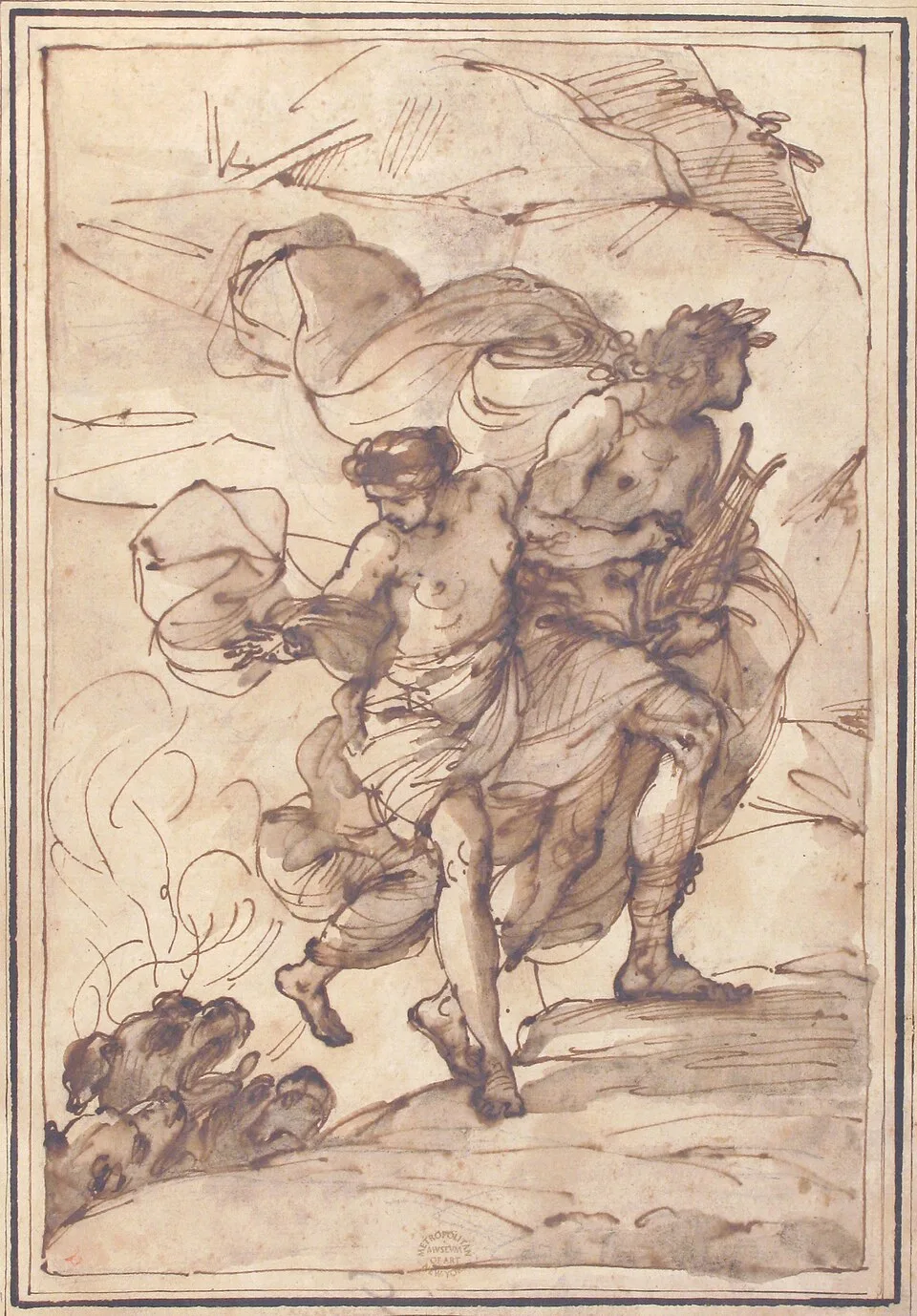
Orpheus
Greek · demigod · heroic age · Recorded classification
Half-Olympian son of Calliope (Muse of epic poetry) by the mortal Thracian king Oeagrus. Music capable of moving stones, taming beasts, charming Hades and Persephone — the foundational image of music's transcendent power. Sailed with the Argonauts; his music drowned out the Sirens. After Eurydice's death from snakebite, descended to Hades; Persephone permitted her return on condition Orpheus not look back. He looked. Lost her forever. Torn to pieces by Thracian Maenads; head and lyre floated down the Hebrus to Lesbos still singing. Founder-figure of the Orphic Mysteries. The Orphic gold-leaf tablets (5th-3rd c. BCE, found at Olbia, Hipponion, Pelinna, Petelia, Thurii) contain afterlife instructions for initiates.
Parentage
Domains
- music and mystery rite
Powers
- Charm beasts, trees, stones, and rivers
- Soften the powers of the dead with song
Epithets
- Ὀρφεὺς ὁ Θρῇξ 'Orpheus the Thracian' — the founding singer of the Orphic mysteriesPlato, Protagoras 316d (primary); Pausanias 9.30.4 (primary)
- Ὀρφεὺς θρηικίη φόρμιγξ 'Orpheus the Thracian lyre' — the proverbial Thracian singerPindar, Pythian 4.176-177 (primary)
- χρυσόλυρος of the golden lyreCult-title and hymnic tradition of Orpheus the golden-lyred singer (secondary)
Relations
- equated with: Orpheus, the Thracian Singer and Founder of the MysteriesThe registry's Greek Orpheus and the Thracian culture-hero are the same figure seen from two traditions; the Greeks themselves always marked him Thracian. The Thracian entry stresses the mystery-founder role.M. L. West, The Orphic Poems (1983) (secondary)