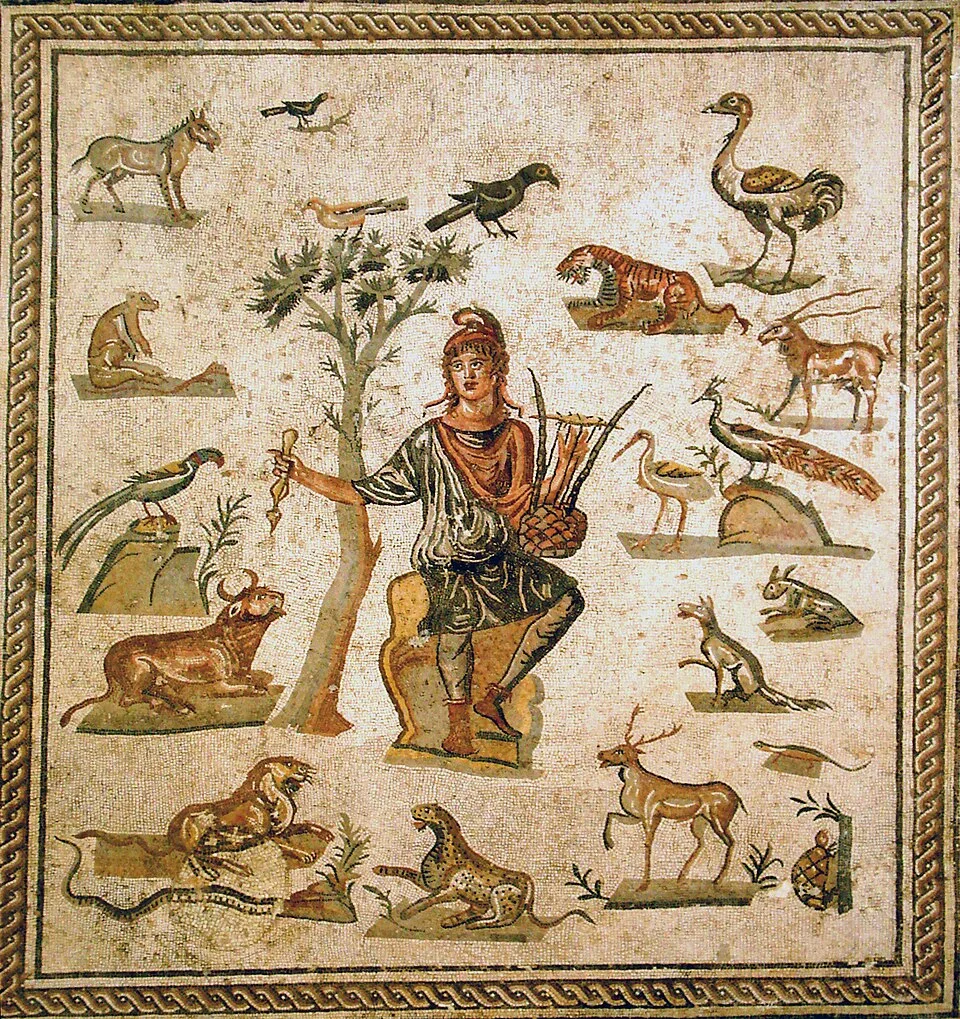
Orpheus, the Thracian Singer and Founder of the Mysteries
Thracian · demigod · Mythic Thrace (pre Trojan generation); Orphic mysteries flourishing into the Hellenistic age · Recorded classification
Thracian culture-hero (the prompt requires culture-hero tiers). Classified 'demigod': son of a Muse and a Thracian king. Though thoroughly Hellenized in surviving literature, he is consistently presented as ethnically Thracian and as the conduit of Thracian 'Orphic' mysteries into Greece. vitalStatus 'deceased' (torn apart by maenads), though his oracular head continued to prophesy on Lesbos. Native name leads as the proper noun (Greek).
Domains
- music and song
- mystery initiation
Powers
- charms beasts, trees and stones with his song
- founds the rites of initiation and afterlife salvation
Epithets
- ἄναξ Βιστονίης lord of Bistonian (Thracian) PieriaApollonius Rhodius, Argonautica 1.34 (primary)
Relations
- companion: The Thracian Dionysus, Lord of the Mountain FrenzyFounder of the Dionysiac mysteries; in Aeschylus' Bassarai strand the god, slighted for Helios, sends his maenads against the singer.Apollodorus, Library 1.3.2 (primary)
- equated with: OrpheusReciprocal of greek_orpheus.equated-with — The registry's Greek Orpheus and the Thracian culture-hero are the same figure seen from two traditions; the Greeks themselves always marked him Thracian. The Thracian entry stresses the mystery-founder role.M. L. West, The Orphic Poems (1983) (secondary)
Sources
- Orpheus is the Thracian singer, son of the Muse Calliope and the Thracian king Oeagrus (some say Apollo), whose song moved nature and who is credited as founder of the Orphic mysteries; ancient sources treat his cult and rites as borrowed by the Greeks from his Thracian people.: Apollonius Rhodius, Argonautica 1.23-34; Plato, Republic 364e (primary)
- His death by dismemberment at the hands of Thracian women near Mount Pangaion, where he had honored Apollo at the oracle of Dionysus, is recounted in Aeschylus' lost Bassarids and by later poets.: Summary of Aeschylus, Bassarids (Eratosthenes/[pseudo-Eratosthenes]); Ovid, Metamorphoses 11.1-66 (primary)