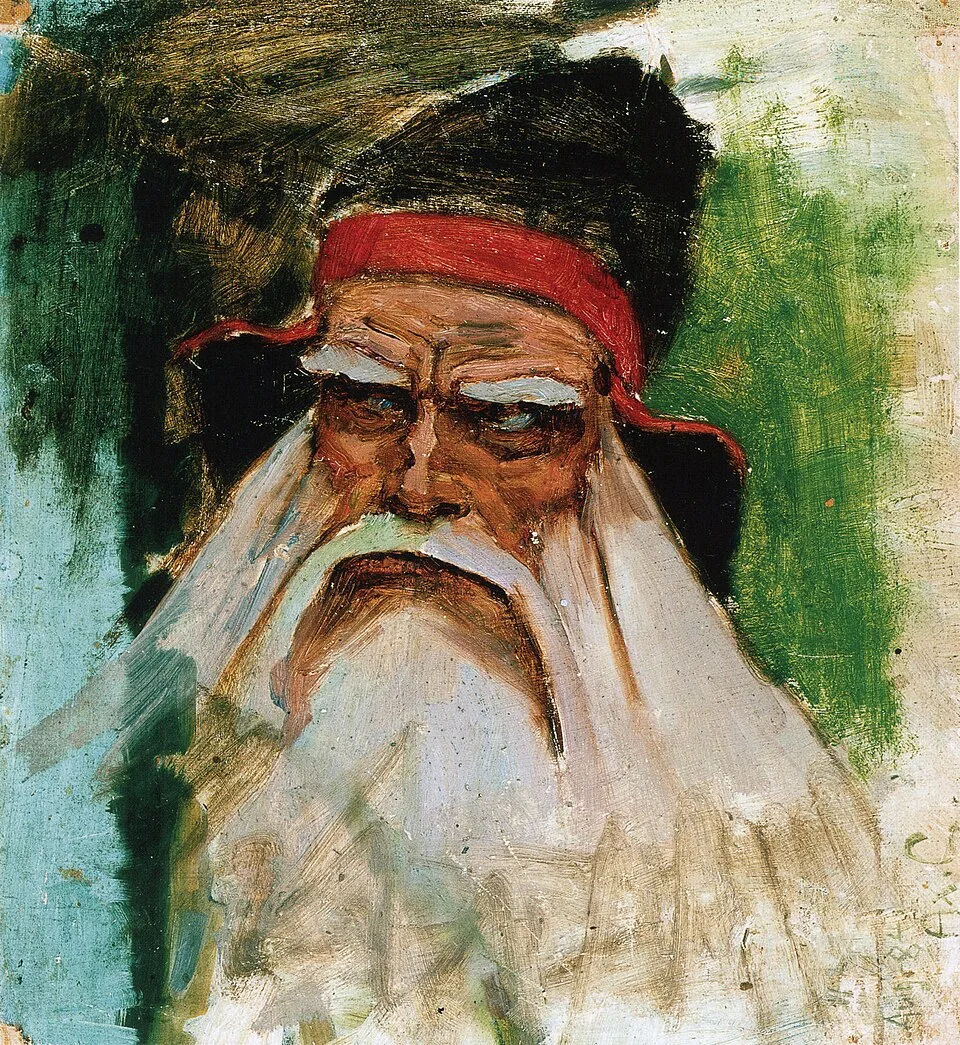
Väinämöinen the Eternal Sage
Karelian · demigod · mythic · Recorded classification
Karelian form of the sage-hero, distinct from the Finnish national-romantic figure: foregrounds the Viena/Olonets Karelian runo-singing milieu (Arhippa Perttunen and other Karelian laulajat) that actually preserved the songs. English lead; native Väinämöinen in term. Demigod tier as son of Ilmatar; a shamanic culture-hero (explained per rule).
Domains
- song and incantation
- wisdom
Powers
- work magic by singing
- enchant all nature with the kantele
Epithets
- vaka vanha Väinämöini Steadfast old Väinämöinen — standing epithet in the Viena Karelian runotSKVR (Suomen Kansan Vanhat Runot), Viena/Archangel Karelian runo-corpus (primary); Recorded from Arhippa Perttunen and other Viena Karelian singers (secondary)
- tietäjä iänikuinen The eternal sage / age-old knowerSKVR (Suomen Kansan Vanhat Runot), Karelian runo-corpus (primary)
Relations
- companion: Ilmarinen the Sky-SmithSage and smith voyage together in the Karelian Sampo-raid runos; in the courtship songs they also appear as rival suitors of the Pohjola maiden.Suomen Kansan Vanhat Runot I (Viena Karelian Sampo-cycle runos, incl. Arhippa Perttunen, 1834) (primary)
- equated with: VäinämöinenReciprocal of finnish_vainamoinen.equated-with — One epic sage: Lönnrot's Kalevala Väinämöinen was compiled chiefly from Viena/Olonets Karelian singers' runos; the Karelian entry is the oral-corpus form, the Finnish one the national-romantic redaction.Suomen Kansan Vanhat Runot (SKVR) I, Viena Karelian epic runos (primary); A.-L. Siikala, Itämerensuomalaisten mytologia (2012) (secondary)
Sources
- Väinämöinen is the eternal sage, singer and primal shaman-hero of Karelian runo-song and the Kalevala, born of the air-maiden Ilmatar after a cosmogonic gestation.: Kalevala, ed. Elias Lönnrot, 1849 (primary); Anna-Leena Siikala, Mythic Images and Shamanism, FFC 280, 2002 (secondary)
- The bulk of the runo-songs about Väinämöinen were recorded by Lönnrot and predecessors in (Archangel/Viena and Olonets) Karelia, where oral runo-singing survived into the 19th century after fading in western Finland.: Anna-Leena Siikala, 'Body, Performance and Agency in Kalevala Rune-Singing', Oral Tradition 15/2, 2000 (secondary); Kalevala, Wikipedia (tertiary)