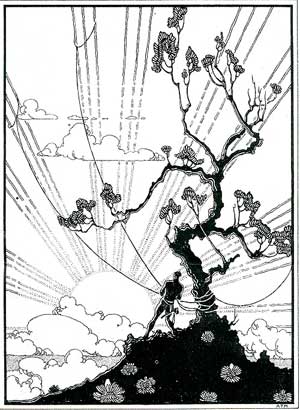
Maui
Mangaian · demigod · mythic prehistoric · Recorded classification
Maui, son of Ru and Buataranga, follows his mother into Avaiki and obtains the secret of making fire from Mauike.
Parentage
Recorded default; alternative parentage accounts are listed separately below.
No parents recorded in the default.
Parentage accounts
Each account is a separate source claim. The parentage and children listed outside these accounts use the recorded default. Selecting an account in the interactive app updates its lineage, descent classification and inherited-power candidates. Linked pedigree accounts are selected together; other records retain their recorded parentage. Claims of ancestry are not proof of biological descent or attested powers.
- Ru and Buataranga (Gill)
deity by descent in this account.
- father: RuWilliam Wyatt Gill, Myths and Songs from the South Pacific (1876), pp. 51 (primary)
- mother: BuatarangaWilliam Wyatt Gill, Myths and Songs from the South Pacific (1876), pp. 51 (primary)
Domains
- fire bringing
- the sun
- trickster culture hero
Powers
- wrest the secret of fire from the fire-god Mauike
- snare the sun to lengthen the day
Relations
- equated with: Māui-tikitiki-a-TarangaReflex of the same ancestral Polynesian deity (*Māui), cognate across the island groups.Comparative Polynesian mythology: reflexes of the same ancestral deity across the island groups (E. Tregear, Maori-Polynesian Comparative Dictionary, 1891; R. D. Craig, Dictionary of Polynesian Mythology, 1989) (secondary)
- equated with: MāuiReflex of the same ancestral Polynesian deity (*Māui), cognate across the island groups.Comparative Polynesian mythology: reflexes of the same ancestral deity across the island groups (E. Tregear, Maori-Polynesian Comparative Dictionary, 1891; R. D. Craig, Dictionary of Polynesian Mythology, 1989) (secondary)
- equated with: Maui-tikitikiReflex of the same ancestral Polynesian deity (*Māui), cognate across the island groups.Comparative Polynesian mythology: reflexes of the same ancestral deity across the island groups (E. Tregear, Maori-Polynesian Comparative Dictionary, 1891; R. D. Craig, Dictionary of Polynesian Mythology, 1989) (secondary)
- equated with: MahuiReflex of the same ancestral Polynesian deity (*Māui), cognate across the island groups.Comparative Polynesian mythology: reflexes of the same ancestral deity across the island groups (E. Tregear, Maori-Polynesian Comparative Dictionary, 1891; R. D. Craig, Dictionary of Polynesian Mythology, 1989) (secondary)
- equated with: Maui KisikisiReflex of the same ancestral Polynesian deity (*Māui), cognate across the island groups.Comparative Polynesian mythology: reflexes of the same ancestral deity across the island groups (E. Tregear, Maori-Polynesian Comparative Dictionary, 1891; R. D. Craig, Dictionary of Polynesian Mythology, 1989) (secondary)
- father: RuWilliam Wyatt Gill, Myths and Songs from the South Pacific (1876), pp. 51 (primary)
- mother: BuatarangaWilliam Wyatt Gill, Myths and Songs from the South Pacific (1876), pp. 51 (primary)
- companion: AkaotuW. W. Gill, Myths and Songs from the South Pacific (1876), pp. 52–57 (primary)
Sources
- Maui, the youngest of the brothers and son of Ru and Buataranga, wrests fire from the fire-god Mauike in Avaiki and snares the sun Ra to lengthen the day.: William Wyatt Gill, Myths and Songs from the South Pacific (1876), Ch. III 'The story of Maui', pp. 51–63 (primary)
- In the Mangaian (and wider Cook Islands) version Maui kills / overcomes the fire-god and obtains fire for mankind.: Roland B. Dixon, Oceanic Mythology (1916), pp. 41–53 (secondary)
- Maui, son of Ru and Buataranga, follows his mother into Avaiki and obtains the secret of making fire from Mauike.: William Wyatt Gill, Myths and Songs from the South Pacific (1876), pp. 51–58 (primary)