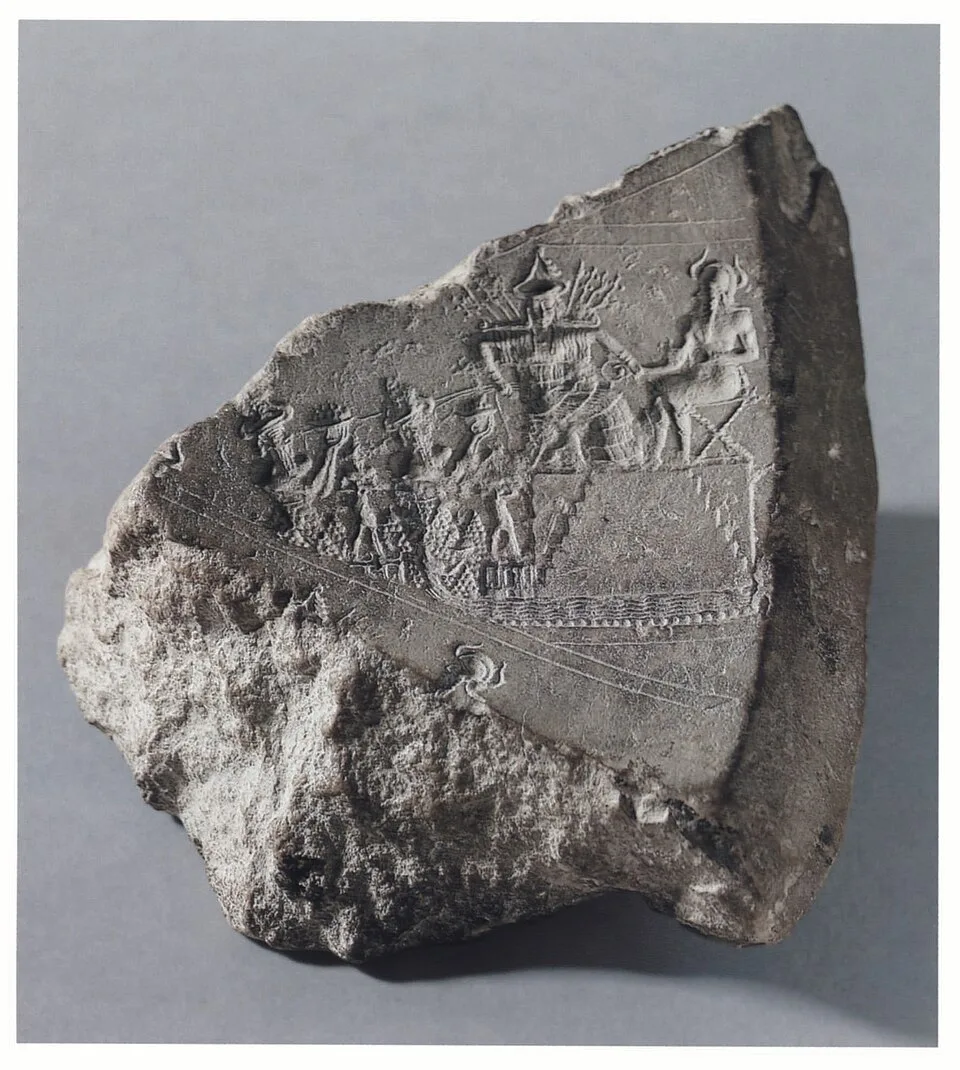
Naram-Sin
Mortal-tier (per registry strict-paternal-criterion: father Manishtushu was a mortal Akkadian king) ruler of the Akkadian Empire ~2254-2218 BCE; grandson of Sargon. The first Mesopotamian king known to have claimed divinity for himself during his own lifetime — prefixed his name with the divine determinative dingir 𒀭 in his own royal inscriptions; took the title "God of Akkad"; adopted the horned-helmet iconography traditionally reserved for deities; was officially worshipped during his lifetime. The Bassetki Statue inscription (Iraq Museum IM 77823) is the canonical-primary attestation of the self-deification narrative. The Victory Stele of Naram-Sin (Louvre Sb 4) is the canonical-iconographic reference-point for ancient-Mesopotamian royal-victory monumental art. Under Naram-Sin the Akkadian Empire reached its maximum extent. The self-divinization is a unique innovation in Mesopotamian kingship-ideology, paralleled later by the Ur III dynasty (Šulgi onward, hence the historical-political backdrop for the existing registry's Šulgi divine-paternity claim) and by Hellenistic ruler-cults.
Parentage
- father: ManishtushuNaram-Sin royal inscriptions; Cruciform Monument of Manishtushu (primary)
Children
Powers
- Marched on and demolished Enlil's Ekur temple, provoking the gods
- Claimed dominion over the four quarters of the world
- Held the title God of Akkad
- Declared himself a living god, writing his name with the divine determinative
Relations
- father: ManishtushuNaram-Sin royal inscriptions; Cruciform Monument of Manishtushu (primary)
- father of: Šar-kali-šarriŠar-kali-šarri royal inscriptions; Sumerian King List (primary)
Sources
- existence: Naram-Sin royal inscriptions (Frayne, RIME 2; CDLI corpus) (primary); Victory Stele (Louvre Sb 4) (primary); Bassetki Statue (Iraq Museum IM 77823) (primary); Alabaster vase Louvre AO 74 (primary); Mace head Ilaba dedication (CDLI Tablet 345) (primary); Sumerian "Curse of Agade" composed during the Ur III period — the literary-tradition-narrative of the Akkadian collapse blamed on Naram-Sin's sacrilege (primary)
- self-divinization: Bassetki Statue inscription; royal-name dingir prefix in own inscriptions (primary)