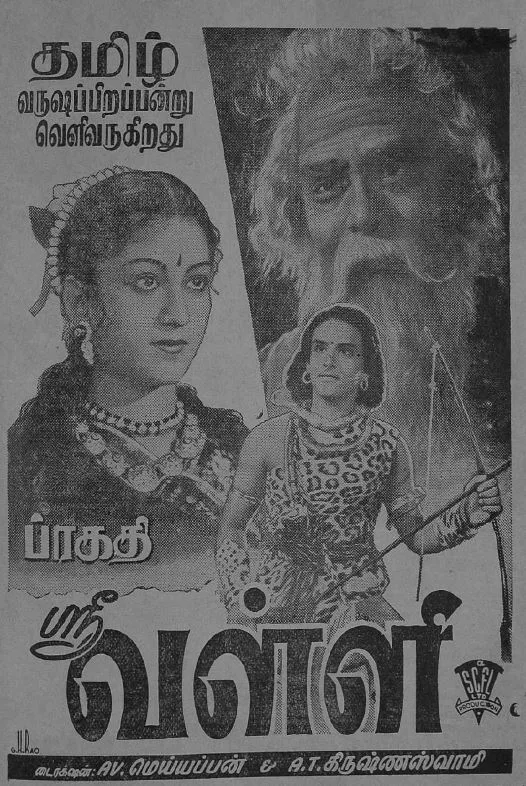
Valli
Tamil · deity · mythic · Recorded classification
Parentage
Recorded default; alternative parentage accounts are listed separately below.
No parents recorded in the default.
Parentage accounts
Each account is a separate source claim. The parentage and children listed outside these accounts use the recorded default. Selecting an account in the interactive app updates its lineage, descent classification and inherited-power candidates. Linked pedigree accounts are selected together; other records retain their recorded parentage. Claims of ancestry are not proof of biological descent or attested powers.
- Kanda retelling: birthThe adoptive hunter is unnamed in this passage.
deity by descent in this account.
- father: Siva MuniA Short Illustrated Kanda Puranam, Murugan Bhakti, prior lives and concluding marriage paragraphs (secondary)
- Kanda retelling: Sundara Valli’s prior lifePrior-life identity, not a second father in the same biological birth.
deity by descent in this account.
- father: VishnuA Short Illustrated Kanda Puranam, Murugan Bhakti, prior lives and concluding marriage paragraphs (secondary)
Names and tradition associations
- Sundara Valli A Short Illustrated Kanda Puranam, Murugan Bhakti, prior lives and concluding marriage paragraphs (secondary)
Variant accounts
- Prior-life sisterThe retelling pairs Sundara Valli with Amirta Valli as Vishnu’s daughters; Amirta Valli is later Indra’s daughter Teyvayanai/Devasena. The latter’s record is reserved to the Indra lane.A Short Illustrated Kanda Puranam, Murugan Bhakti, prior lives and concluding marriage paragraphs (secondary)
Domains
- consort of murugan
- kurinci hill country
- divine longing iccha shakti
Powers
- Guard the millet field of the hill-people
- Embody the power of divine longing (icchā-śakti)
Relations
- spouse: MuruganConsort of Murugan, won by the god in the guise of a hill hunter.Tamil Valli-Murugan devotional tradition (reference)
- child of: Siva MuniA Short Illustrated Kanda Puranam, Murugan Bhakti, prior lives and concluding marriage paragraphs (secondary)
Sources
- existence: Tirumurukarruppatai (Sangam corpus); Tamil Valli-Murugan devotional tradition; Kanda Puranam (reference)