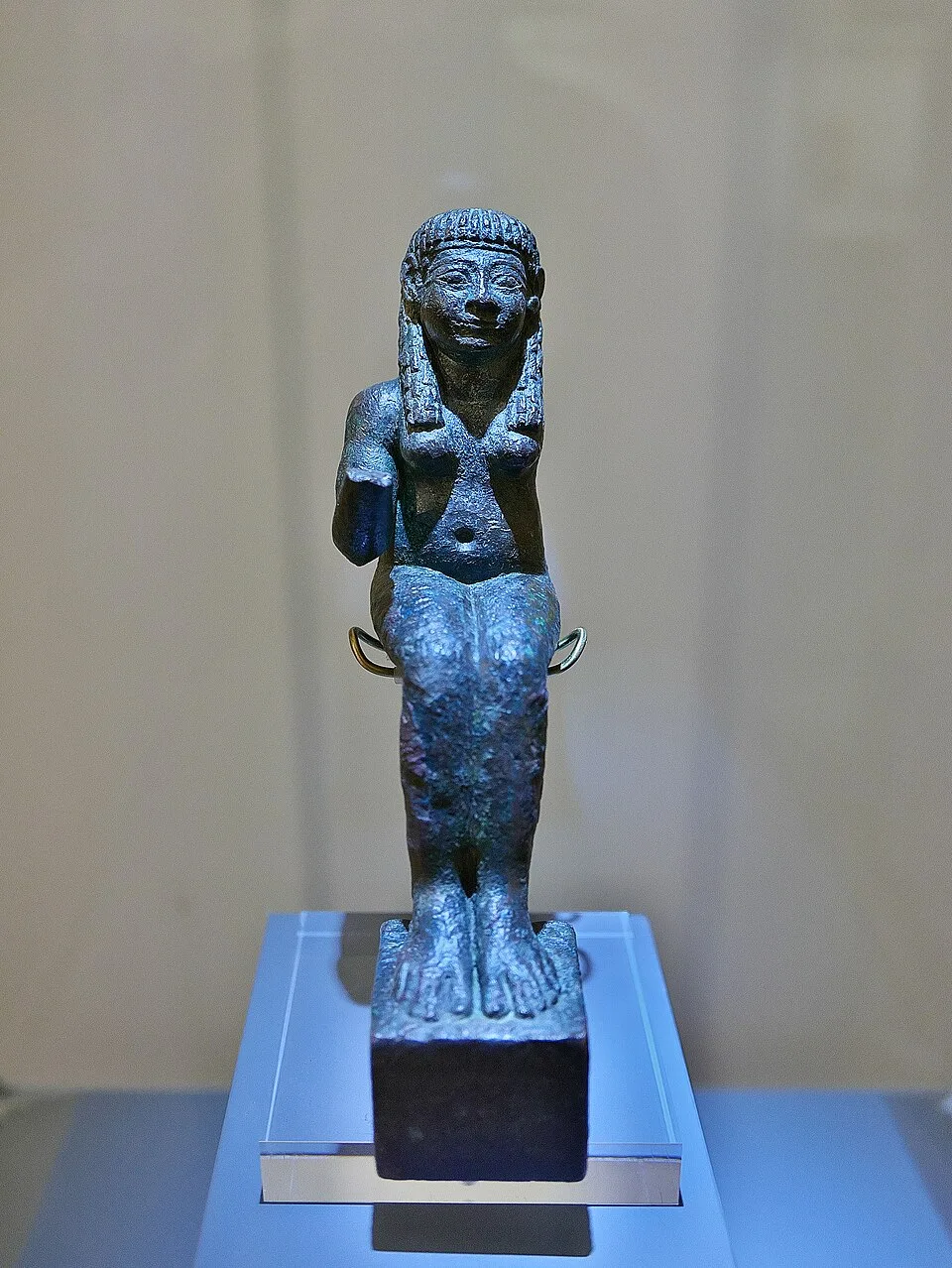
Astarte
Astarte, appearing in the Hebrew Bible under the deliberately distorted form Ashtoreth, is a goddess of love, war and the astral heavens, the Levantine cognate of Mesopotamian Ishtar. She is named as 'the goddess of the Sidonians' introduced into the Jerusalem cult under Solomon and abolished by Josiah, and her sanctuary receives the armour of the fallen Saul. She is repeatedly paired with Baal in the recurring biblical formula 'the Baals and the Ashtaroth'. Many scholars identify her, or a goddess very like her, with the 'Queen of Heaven' whom sixth-century Judahite families honoured with molded cakes and drink offerings, a rite the people of Jeremiah's day defended as bringing prosperity; the precise identity behind that title, whether Astarte, Ishtar or Anat, remains debated.
Domains
- love sexuality
- war
- astral
Powers
- stirs love and sexual vitality
- receives cakes and libations as Queen of Heaven
Epithets
- עַשְׁתֹּרֶת אֱלֹהֵי צִדֹנִים — Ashtoreth, goddess of the SidoniansHebrew Bible, 1 Kings 11:5, 33 (primary)
- מְלֶכֶת הַשָּׁמַיִם — Queen of Heaven (identification debated)Hebrew Bible, Jeremiah 7:18; 44:17 (primary)
Relations
- ally: BaalRepeatedly paired with Baal in the formula 'the Baals and the Ashtaroth'.Hebrew Bible, Judges 2:13; 10:6; 1 Samuel 7:4 (primary)
Sources
- Astarte / Ashtoreth was worshipped by Israelites and Judahites and is named as the goddess of the Sidonians brought into the cult under Solomon.: Hebrew Bible, 1 Kings 11:5, 33; 2 Kings 23:13; Judges 2:13 (primary); John Day, Yahweh and the Gods and Goddesses of Canaan (2000) (secondary)
- The 'Queen of Heaven' venerated with baked cakes in Jeremiah is identified by many scholars with Astarte (Levantine counterpart of Ishtar), though Anat and a composite figure are also proposed.: Hebrew Bible, Jeremiah 7:18; 44:15-25 (primary); Susan Ackerman, Under Every Green Tree: Popular Religion in Sixth-Century Judah (1992) (secondary)