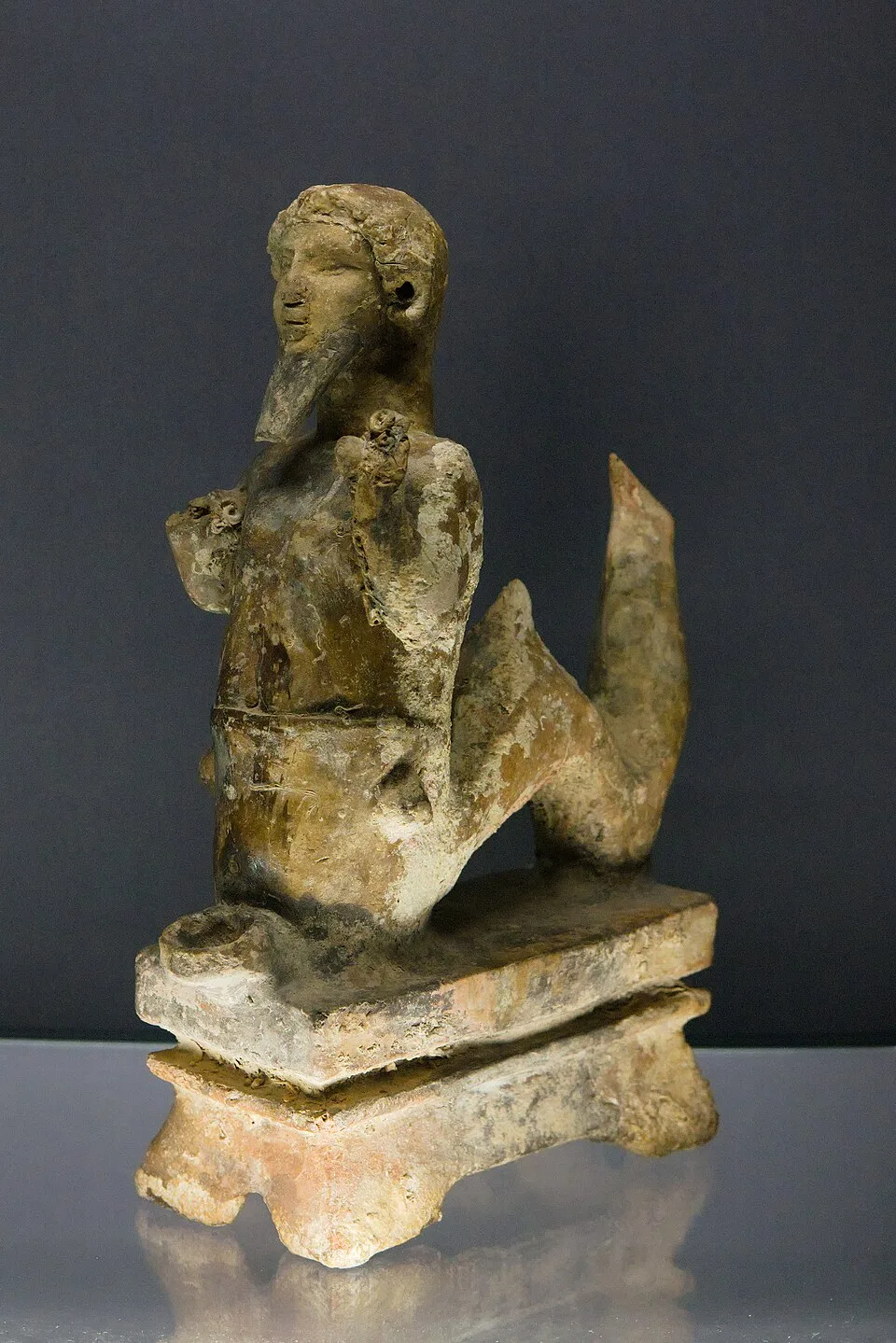
Baal
Ancient Israelite religion / Yahwism · deity · Ancient Israelite religion / Yahwism traditional religion; continuing · Recorded classification
Baal, the West Semitic storm-god Hadad whose title 'lord' became his name, was a genuine object of worship in Israel and Judah and the foremost rival of Yahweh in the tradition's own polemic. He grants the seasonal rains and the fertility of the land, rides the clouds and wields the thunderbolt, powers dramatized in Elijah's contest on Mount Carmel, where the question is which god can send rain and fire. His cult is confirmed archaeologically and by Israelite personal names compounded with baal. Prophetic and Deuteronomistic writers set the worship of Baal in stark opposition to that of Yahweh, and several of Baal's epithets, above all 'Rider of the Clouds', were appropriated for Yahweh himself.
Domains
- storm rain
- fertility
Powers
- brings the seasonal rains and fertility
- rides the clouds and hurls the lightning
Epithets
- בַּעַל שָׁמַיִם — Lord of Heaven (Baal-Shamem)John Day, Yahweh and the Gods and Goddesses of Canaan (2000) (secondary)
- בַּעַל זְבוּל — Baal the Prince (Baal-Zebul)Hebrew Bible, 2 Kings 1:2-3 (Baal-Zebub) (primary)
Relations
- enemy: YahwehCast in the prophetic tradition as Yahweh's principal competitor for Israel's allegiance.Hebrew Bible, 1 Kings 18:20-40; Judges 6:25-32 (primary)
- ally: Astarte'The Baals and the Ashtaroth' are repeatedly paired as the objects of Israel's apostate worship.Hebrew Bible, Judges 2:13; 10:6 (primary)
Sources
- Baal, the storm-god Hadad, was actively worshipped within Israel and Judah and is the great rival of Yahweh in the biblical polemic.: Hebrew Bible, 1 Kings 18; 2 Kings 10; Jeremiah 2:8 (primary); John Day, Yahweh and the Gods and Goddesses of Canaan (2000) (secondary)
- Baal-worship in Israel is confirmed by theophoric personal names such as Jerubbaal, Eshbaal and Meribbaal.: Hebrew Bible, Judges 6:32; 2 Samuel 2:8; 1 Chronicles 8:34 (primary); Mark S. Smith, The Early History of God (2nd ed., 2002) (secondary)