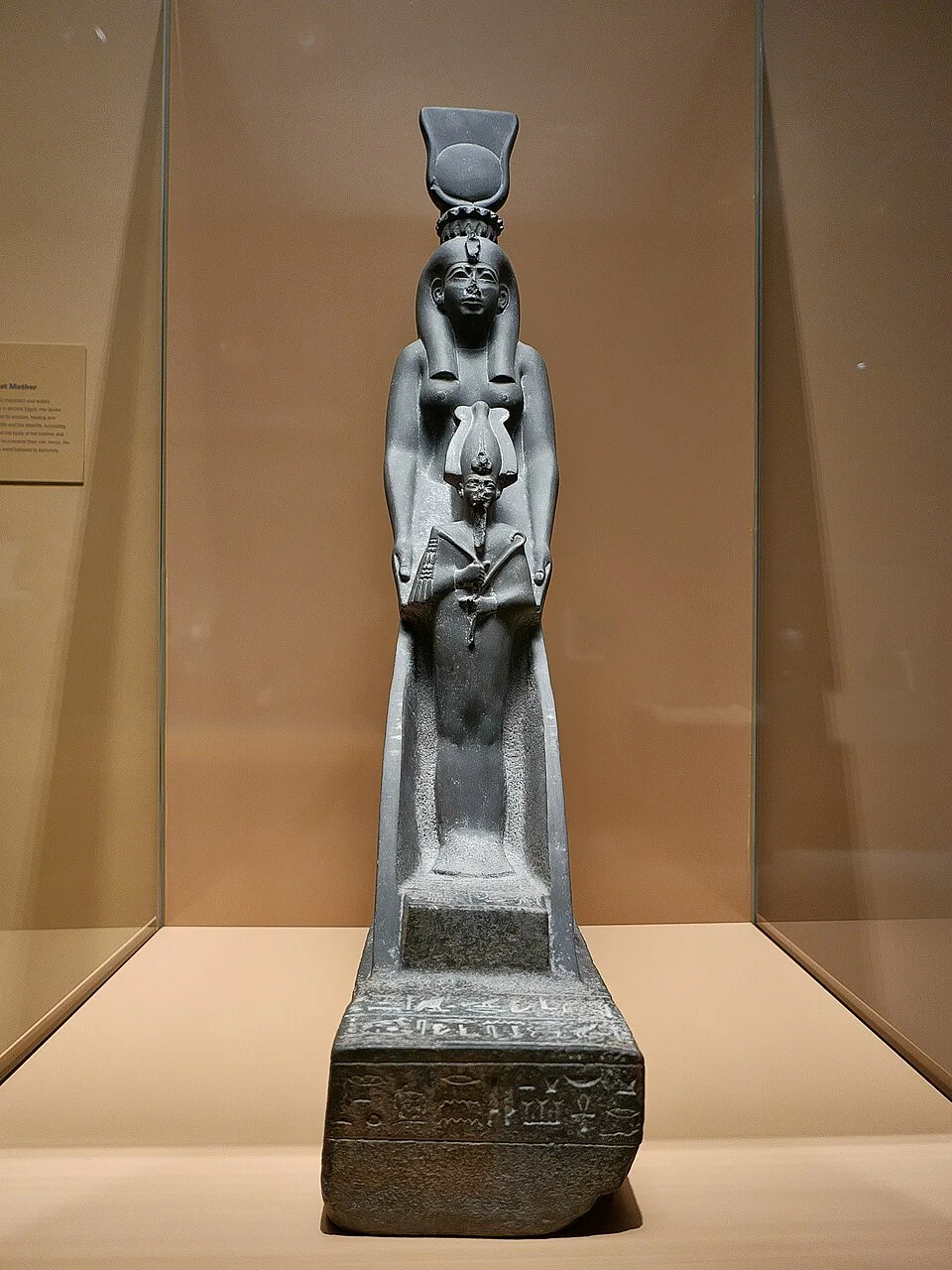
Isis
Egyptian · deity · old kingdom · Recorded classification
Egyptian goddess of magic, motherhood, resurrection. Wife and sister of Osiris; mother of Horus. Her hieroglyphic name 𓊨 IS the throne — etymologically linked to royal legitimation through her embodiment of the throne itself. Reassembled the dismembered Osiris (gathering the parts that Set had scattered across Egypt) in the foundational resurrection narrative. Hellenistic-era spread made her the most-syncretized figure in the Mediterranean — by Apuleius's 2nd-c. CE aretalogy she absorbs Demeter, Aphrodite, Hera, Persephone, Artemis, Athena, Cybele, and others. The Philae temple remained operational until 537 CE, the last Egyptian temple closed by Justinian.
Children
Domains
- magic heka
- maternal protection
- resurrection power
- mediterranean mystery cult
Powers
- Heal sickness and venom
- Restore the dead to life
- Work magic spells
Epithets
- wrt-ḥkꜣw Great of magic; the supreme mistress of magical powerMetternich Stela; Pyramid Texts; magico-medical papyri (primary)
- mwt-nṯr Mother of the god; mother of Horus (and of the living king)Temple of Philae texts; Coffin Texts (primary)
- ꜣs.t wrt Isis the Great; the great goddess in her supreme aspectPhilae temple titulary; Late-Period dedications (primary)
- nbt pt Lady of heaven; the celestial queen-goddessPhilae and Dendera temple texts; cf. Plut. De Is. et Os. (primary)
- myrionymos She of ten thousand names; the all-encompassing Greco-Roman IsisApul. Met. 11.5; Plut. De Is. et Os. 53; the Isis aretalogies (primary)
Relations
- spouse: OsirisPyramid Texts; Plut. De Iside 13 (primary)
- equated with: DemeterEgyptian Isis ↔ Greek Demeter from the 5th c. BCE onward; the Eleusinian-Isiac mystery overlap drove Hellenistic-era syncretism.Hdt. 2.59; Plut. De Iside 27, 38; Apul. Met. 11.5 (primary)
- equated with: AphroditeApul. Met. 11.5 (Isis aretalogy: "the Cyprians call me Paphian Aphrodite") (primary)
- equated with: AstartePlutarch's De Iside has Isis arrive at Byblos and serve in the household of the queen Astarte — a literary equation that reflects the Phoenician-Egyptian cult overlap at Byblos.Plut. De Iside 15-16 (the Byblos Astarte who hosted Isis on her quest for Osiris's body) (primary); Plut. De Iside 15-16 (the Byblos Astarte who hosted Isis on her quest for Osiris's body) (primary)
- interpretatio: DemeterReciprocal of greek_hesiod_demeter.interpretatio — Hdt: 'Isis is in the Greek tongue Demeter.' Preserves grain-giving and mourning-search for a lost kin (Persephone/Osiris); breaks on Isis's magic, queenship, and wifely rather than maternal grief.Herodotus, Histories 2.59 (primary); Diodorus Siculus 1.13.5, 1.25 (primary)
Sources
- existence: Pyramid Texts §366, §628, §1280; Plut. De Iside et Osiride; Apul. Met. 11; Diod. 1.13-27 (primary)
- mediterranean-syncretism: Apul. Met. 11.5 (the great Isis aretalogy listing her many names across the Mediterranean) (primary)