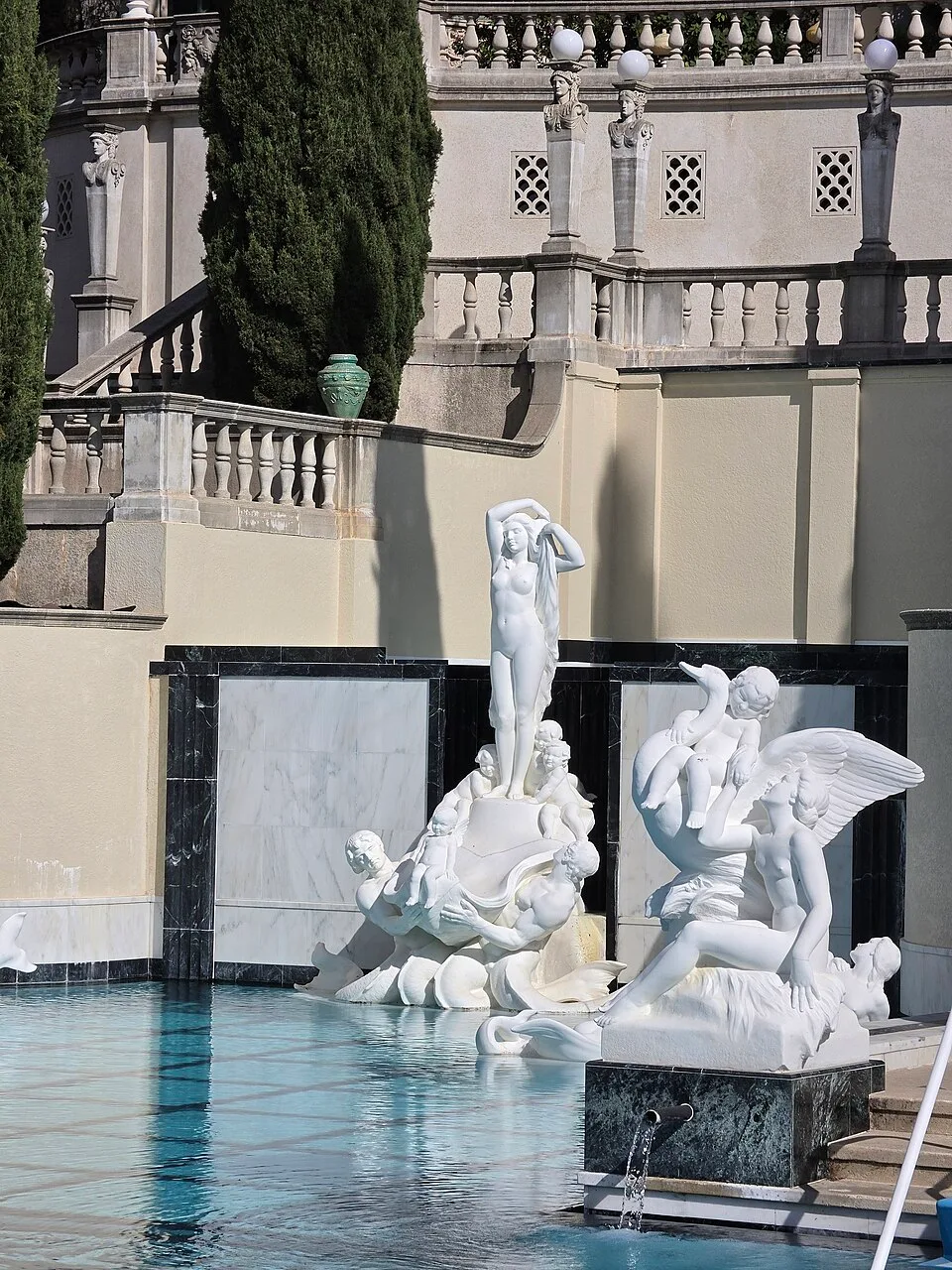
Aphrodite
Greek · deity · primordial · Recorded classification
Greek goddess of erotic desire and beauty. Two competing parentages: Hesiod has her foam-born from the severed genitals of Ouranos (the older tradition, Aphrodite Urania); Homer has her as daughter of Zeus and Dione (Aphrodite Pandemos). Primary cult sites at Paphos (Cyprus, the aniconic stone) and Cythera. Lover of Ares; wife of Hephaestus; mother of Eros, Anteros, Phobos, Deimos, Harmonia.
Children
Domains
- erotic desire
- beauty
- sea born
Powers
- Kindle love and sexual desire
Epithets
- Κυπρίς The Cyprian; from Cyprus, site of her sea-birth landfall at PaphosHom. Il. 5.330; Sappho fr. 2 (primary)
- Κυθέρεια The Cytherean; of the island of Cythera by which she rose from the seaHes. Theog. 196-198; Hom. Od. 8.288 (primary)
- Οὐρανία Heavenly; the celestial Aphrodite (foam-born of Ouranos)Plat. Symp. 180d-181a; Hdt. 1.105; Paus. 1.14.7 (primary)
- Πάνδημος Of all the people / common; the civic and worldly AphroditePlat. Symp. 180d-181a; Paus. 1.22.3 (primary)
- φιλομμειδής Laughter-loving (with a learned pun on 'genital-loving'); Homeric epithetHom. Il. 3.424; Hes. Theog. 200 (primary)
- Ἀναδυομένη Rising up (from the sea); the foam-born goddess emerging from the wavesPlin. HN 35.91 (Apelles' Aphrodite Anadyomene); Hes. Theog. 188-195 (primary)
- χρυσέη Golden (the formulaic “golden Aphrodite”)Homer, Iliad 3.64; Odyssey 8.337 (primary)
- ἐϋστέφανος Fair-crowned / well-garlandedHesiod, Theogony 196, 1008; Homeric Hymn 6.1 (primary)
- Παφία Paphian; of her great Cyprian sanctuary at PaphosPausanias 1.14.7; Tacitus, Histories 2.2–3 (primary)
Relations
- lover: AnchisesReciprocal of greek_anchises.loverHom. Il. 5.247-318; Hymn. Hom. Aphr. 53-291 (primary)
- spouse: HephaestusHom. Od. 8.266-366 (primary)
- lover: AresThe net-trap episode in Odyssey 8 — Hephaestus catches them in golden chains; gods laugh.Hom. Od. 8.266-366; Hes. Theog. 933-937 (primary)
- interpretatio: VenusAphrodite ↔ Venus per ancient interpretatio. Italic Venus was originally a vegetable-garden goddess; the equation produced Augustan-era Venus Genetrix as ancestress of the Julian line via Aeneas. Venus entry pending in registry.Verg. Aen. 1.314-417 (Aeneas's mother); Lucr. 1.1-49 (primary); Verg. Aen. 1.314-417 (Aeneas's mother); Lucr. 1.1-49 (primary)
- equated with: AstarteGreek Aphrodite ↔ Phoenician Astarte — Herodotus credits the Phoenicians with founding both the Cythera and Paphos cults; the dove iconography, conical stone, and love-and-war dual aspect were inherited from Astarte. The Greek tradition itself acknowledged foreign origin.Hdt. 1.105 ("the most ancient temple of Aphrodite was founded from the Phoenician Ascalon shrine"); Paus. 1.14.7; Tac. Hist. 2.3 (the conical Paphian stone) (primary); Hdt. 1.105 ("the most ancient temple of Aphrodite was founded from the Phoenician Ascalon shrine"); Paus. 1.14.7; Tac. Hist. 2.3 (the conical Paphian stone) (primary)
- equated with: IsisHellenistic-era Aphrodite-Isis equation as part of the Isis-aretalogy tradition where Isis subsumes Mediterranean love-goddesses.Apul. Met. 11.5 (Isis aretalogy: "the Cyprians call me Paphian Aphrodite"); Plut. De Iside 27 (primary)
- interpretatio: AstartePhilo: 'Astarte the Phoenicians say is Aphrodite'; Hdt derives Ourania's cult from Phoenicia. Preserves love + evening-star; breaks on Astarte's war portfolio, which Greek Aphrodite largely shed.Philo of Byblos apud Eusebius, Praep. ev. 1.10.32 (primary); Herodotus, Histories 1.105 (Aphrodite Ourania at Ascalon) (primary)
- interpretatio: HathorGreeks in Egypt read Hathor of Dendera as Aphrodite. Preserves love, music, and female joy; breaks on Hathor's cow-form, sky-mothering, and her furious Eye-of-Ra aspect, which has no Aphrodisian analogue.Strabo, Geography 17.1.44 (temple of Aphrodite at Tentyra/Dendera) (primary)
- interpretatio: AllātHdt: the Arabians call Aphrodite Ourania 'Alilat'. Preserves the heavenly-goddess reading via the Venus-star; breaks on Allat's armed protectress character, which Greeks elsewhere matched to Athena.Herodotus, Histories 3.8 (Alilat), 1.131 (primary)
- equated with: al-UzzaA Nabataean-Greek bilingual from Cos renders al-Uzza as Aphrodite; her Venus-star nature carries the match. Breaks on al-Uzza's warrior-protectress role and aniconic betyl cult at Petra.J. F. Healey, The Religion of the Nabataeans (2001), on the Cos bilingual (al-Uzza = Aphrodite) (secondary)
- interpretatio: MithraHdt claims Persians call Aphrodite Ourania 'Mitra' — an attested ancient equation, but a famous error: he has confused Mithra with Anahita. Preserved here as evidence of transmission, not of cult reality.Herodotus, Histories 1.131 (primary)
- equated with: AstghikArmenian tradition glosses Astghik ('little star', Venus) as Aphrodite; spouse of Vahagn-Heracles. Preserves the love-and-Venus core; breaks on Astghik's water-and-rose festival (Vardavar) localism.J. R. Russell, Zoroastrianism in Armenia (1987) (secondary)
- interpretatio: Heavenly Aphrodite ArgimpasaReciprocal of scythian_argimpasa.interpretatio — Hdt equates Argimpasa with Aphrodite Ourania, the celestial Venus-goddess. Preserves the great-goddess-of-love slot; breaks on Argimpasa's sovereignty and her ecstatic Enarees diviners, alien to Aphrodite.Herodotus, Histories 4.59 (Aphrodite Ourania = Argimpasa) (primary)
- counterpart of: AphroditeTradition-specific counterpart; this link does not transfer parentage.Orphic Hymns 54 (Taylor; modern 55) (primary)