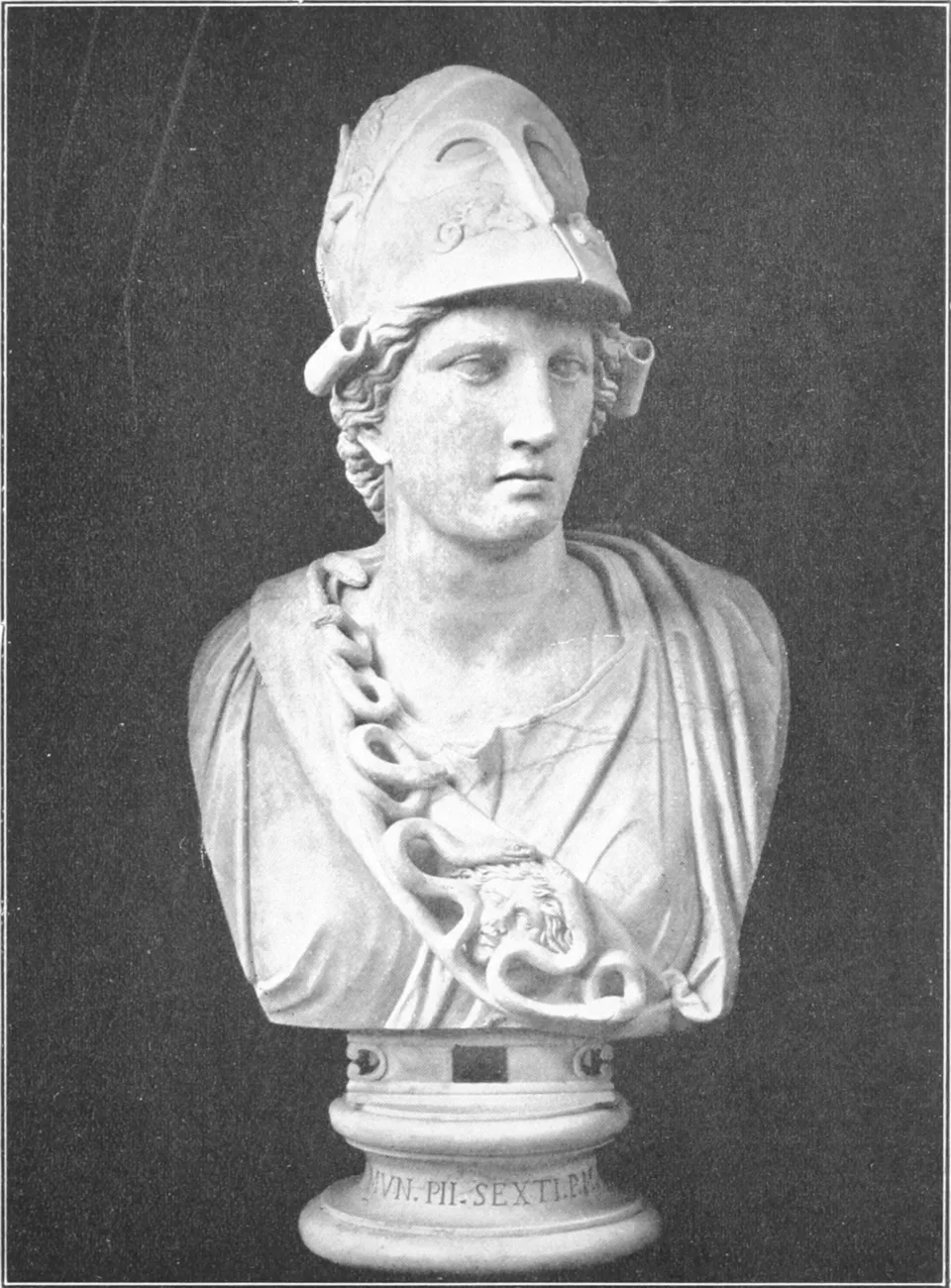
Minerva
Roman · deity · regal · Recorded classification
Roman Capitoline triad goddess; came to Rome via Etruscan Menrva during the Tarquinian regal period. The Capitoline triad form (single temple, three cellas) is itself an Etruscan introduction. Distinct from Greek Athena: Roman institutional features include the triad cult-sharing with Iuppiter and Iuno, the Aventine guild-patronage temple (scribae and histriones), the Quinquatrus craft-and-learning frame, the Minerva Capta evocatio from Falerii (241 BCE). Per Bonfante 1990; Wissowa 1912; Beard/North/Price 1998.
Parentage
- father: IuppiterParentage in the cited Latin account.Hyginus, Fabulae, Preface: minerva (primary)
Domains
- wisdom craft
- guild patronage
- medicine
Powers
- Excels in and judges craft, especially weaving
- Springs full-grown and armed from Jupiter's head
Epithets
- Capta The Captured / Taken; Minerva of the Caelian shrine (brought from Falerii)Ov. Fast. 3.835-848 (primary)
- Medica The Healer / physician; Minerva as patroness of medicineCIL VI 10133; cf. Cic. Div. 2.123 (primary)
- Capitolina Of the Capitol; Minerva of the Capitoline triad with Jupiter and JunoLivy 7.3; CIL inscriptions of the Capitoline cult (secondary)
Relations
- equated with: AthenaMinerva is the Roman state-cult equivalent of Greek Athena; shared wisdom/craft/strategic-warfare iconography. Etruscan Menrva is the intermediate transmission-layer (Roman cult absorbed via Etruscan).Standard interpretatio Graeca/Romana scholarship; Beard, North & Price, Religions of Rome (1998); Wissowa, Religion und Kultus der Römer (1912) (secondary)
- interpretatio: AthenaMinerva ↔ Athena per ancient interpretatio. The Roman name and cult derive from Etruscan Menrva (not directly from Athena), making Minerva a doubly-mediated figure: Athena-form via Etruscan transmission. Distinct entry retained because the Capitoline triad institutional structure, the Quinquatrus craft-and-learning frame, the Aventine guild-patronage, and the Capta-from-Falerii commemoration are Roman-only features.Cic. Nat. D. 3.53-59 (primary)
- syncretism: MenrvaDirect Etruscan source — Menrva is the Etruscan Athena-derived helmeted craftswoman. Tarquinian transmission introduced her to Rome along with the Capitoline triad form.Bonfante 1990; Etruskische Spiegel (secondary)
- interpretatio: MenrvaReciprocal of etruscan_menrva.interpretatio.de Grummond, Etruscan Myth, Sacred History, and Legend (2006) (secondary)
- father: IuppiterParentage in the cited Latin account.Hyginus, Fabulae, Preface: minerva (primary)
Sources
- existence: Liv. 1.55, 31.50; Cic. Nat. D. 3.53-59; Ov. Fast. 3.809-848, 6.651-710 (primary)
- etruscan-origin: Bonfante 1990; Etruskische Spiegel; Pyrgi tablets c.500 BCE (primary)
- identification: Cic. Nat. D. 3.53-59 (primary)