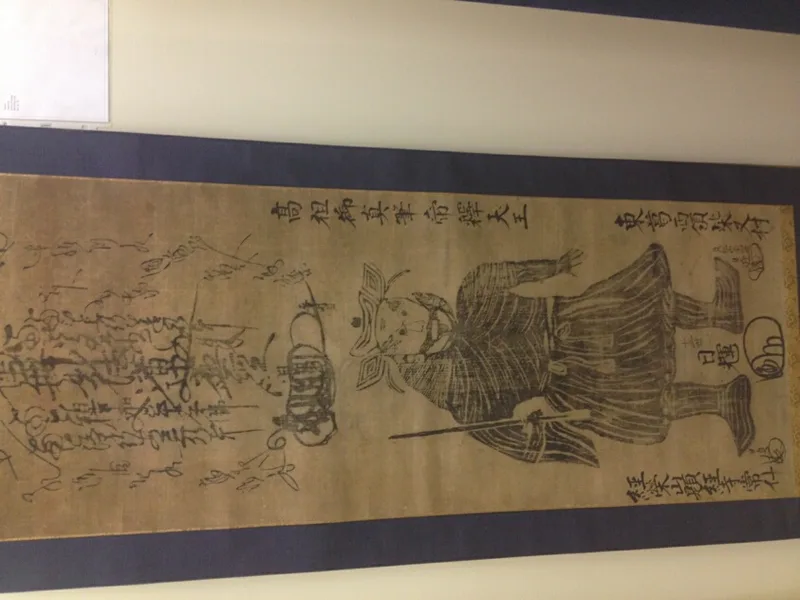
Śakra
Buddhist · deity · mythic · Recorded classification
Buddhist ruler of the Thirty-Three devas, also called Sakka. He remains subject to death and rebirth. His family and prior-life stories vary by text.
Children
Names and tradition associations
- Sakka G. P. Malalasekera, Dictionary of Pāli Proper Names, s.v. Sakka, sections on family, epithets, office and Indra (secondary)
- Indra G. P. Malalasekera, Dictionary of Pāli Proper Names, s.v. Sakka, sections on family, epithets, office and Indra (secondary)
- Taishakuten JAANUS, s.v. Taishakuten, iconography at Tōji (secondary)
- Hwanin Iryeon, Samguk yusa, book 1, Gojoseon entry (primary)
- Dìshì Iryeon, Samguk yusa, book 1, Gojoseon entry (primary)
- Qormusta Tengri Walther Heissig, The Religions of Mongolia (1980), pp. 49–50 (secondary)
- Thagyamin Northern Illinois University, The Pagan Period, Shwezigon stupa and nat shrine (secondary)
- Dìshìtiān Ding Fubao, Dictionary of Buddhist Studies (1922), 帝釋天 (secondary)
- 釋提桓因 Ding Fubao, Dictionary of Buddhist Studies (1922), 帝釋 and quoted Mahāvairocana commentary (secondary)
Variant accounts
- Office and bearerSakka is an office held in different births and world systems; stories need not describe one continuous divine biography.G. P. Malalasekera, Dictionary of Pāli Proper Names, s.v. Sakka, sections on family, epithets, office and Indra (secondary)
- Buddhist adaptationThe dictionary treats Sakka and Vedic Indra as distinct conceptions with related epithets. The counterpart link does not establish interchangeable biographies.G. P. Malalasekera, Dictionary of Pāli Proper Names, s.v. Sakka, sections on family, epithets, office and Indra (secondary)
- source review correctionSN 11.3 concerns standards; replace the misattributed assertion with the dictionary’s weapon notice.G. P. Malalasekera, Dictionary of Pāli Proper Names, s.v. Sakka, sections on family, epithets, office and Indra (secondary)
- source review correctionAn office held across births should not be expressed as one uninterrupted biography.G. P. Malalasekera, Dictionary of Pāli Proper Names, s.v. Sakka, sections on family, epithets, office and Indra (secondary)
- source review correctionJapanese Buddhist protector iconography does not establish that the Pali Sakka is a Bodhisattva.JAANUS, s.v. Taishakuten, iconography at Tōji (secondary)
- source review correctionPossession of a weapon does not establish identity with another figure.G. P. Malalasekera, Dictionary of Pāli Proper Names, s.v. Sakka, sections on family, epithets, office and Indra (secondary)
- source review correctionReplace unconditional equivalence with the source-bounded relationship status.G. P. Malalasekera, Dictionary of Pāli Proper Names, s.v. Sakka, sections on family, epithets, office and Indra (secondary)
- source review correctionReplace unconditional equivalence with the source-bounded relationship status.Iryeon, Samguk yusa, book 1, Gojoseon entry (primary)
- source review correctionReplace unconditional equivalence with the source-bounded relationship status.Gaoshang Yuhuang benxing jijing, upper scroll, Qingwei tiangong shentong pin 1, Jingde and Baoyueguang narrative (primary)
- source review correctionQualify both endpoints consistently with the reviewed Burmese evidence.Northern Illinois University, The Pagan Period, Shwezigon stupa and nat shrine (secondary)
Domains
- heaven trayastrimsha
- kingship of the devas
- thunderbolt and storm
Powers
- Rule the Heaven of the Thirty-Three gods
- Bear a thunderbolt weapon
- Guard the Buddha and protect the Dharma
Epithets
- शक्रो देवानामिन्द्रः Śakra, lord of the devas; standard Buddhist titleSakka-saṃyutta, Saṃyutta Nikāya 11; standard Pali formula 'Sakko devānaṃ indo' (primary)
- कौशिक Epithet of Śakra/Indra, 'of the Kuśika clan'Sakka-saṃyutta, Saṃyutta Nikāya 11 (Kosiya); Aṣṭasāhasrikā Prajñāpāramitā (primary)
- 帝釋天 Lord Śakra of the heavens; East Asian Buddhist title for IndraChinese Buddhist canon (Taishō); rendering of Śakra Devānām Indra (primary)
Relations
- spouse: SujāG. P. Malalasekera, Dictionary of Pāli Proper Names, s.v. Sujā, DhA i.269–279 and DA iii.716–717 (secondary)
- enemy: VemacitrinVepacitti, chief of the asuras, is the perennial foe of the devas of Trayastrimsa; also Sakra's father-in-law through Suja.Samyutta Nikaya 11 (Sakkasamyutta) (primary)
- buddhist adaptation: IndraRelated divine conceptions with shared epithets; independent Buddhist and Hindu narratives.G. P. Malalasekera, Dictionary of Pāli Proper Names, s.v. Sakka, sections on family, epithets, office and Indra (secondary)
- buddhist adaptation: ThagyaminBurmese Indra–Sakka–Thagyamin in the Shwezigon account; regional adaptation does not transfer family or attributes.Northern Illinois University, The Pagan Period, Shwezigon stupa and nat shrine (secondary)
- disputed identification: Jade EmperorLegacy identification awaits verification of its cited Maspero passage. The reviewed Jade Emperor scripture supplies an independent manifestation account.Gaoshang Yuhuang benxing jijing, upper scroll, Qingwei tiangong shentong pin 1, Jingde and Baoyueguang narrative (primary)
- identified in text: HwaninThe Samguk yusa explicitly glosses Hwanin as Śakra.Iryeon, Samguk yusa, book 1, Gojoseon entry (primary)
- father of: ĀsāG. P. Malalasekera, Dictionary of Pāli Proper Names, s.v. Sudhābhojana Jātaka 535, J v.382–412 (secondary)
- father of: SaddhāG. P. Malalasekera, Dictionary of Pāli Proper Names, s.v. Sudhābhojana Jātaka 535, J v.382–412 (secondary)
- father of: Sirī, daughter of SakkaG. P. Malalasekera, Dictionary of Pāli Proper Names, s.v. Sudhābhojana Jātaka 535, J v.382–412 (secondary)
- father of: HirīG. P. Malalasekera, Dictionary of Pāli Proper Names, s.v. Sudhābhojana Jātaka 535, J v.382–412 (secondary)
- father of: Susīma, son of SakkaG. P. Malalasekera, Dictionary of Pāli Proper Names, s.v. Susīma 5, S i.217; SA i.262 (secondary)
- rides: ErāvanaG. P. Malalasekera, Dictionary of Pāli Proper Names, s.v. Erāvana 1, DhA i.273f; SnA i.368f (secondary)
- commissions: VissakammaG. P. Malalasekera, Dictionary of Pāli Proper Names, s.v. Vissakamma, Vissukamma, D ii.180; DhA i.272; J iv.325 (secondary)
- favours: Rohinī, sister of AnuruddhaThe relationship follows her heavenly rebirth.G. P. Malalasekera, Dictionary of Pāli Proper Names, s.v. Rohinī 2, DhA iii.295ff (secondary)
Sources
- existence: Pali Canon, Sakka-saṃyutta (SN 11), Saṃyutta Nikāya (primary)
- identity-as-bodhisattva: Buddhaghosa, identification of Sakka with Vajrapāṇi (secondary)
- Buddhist ruler of the Thirty-Three devas, also called Sakka. He remains subject to death and rebirth. His family and prior-life stories vary by text.: G. P. Malalasekera, Dictionary of Pāli Proper Names, s.v. Sakka, sections on family, epithets, office and Indra (secondary)