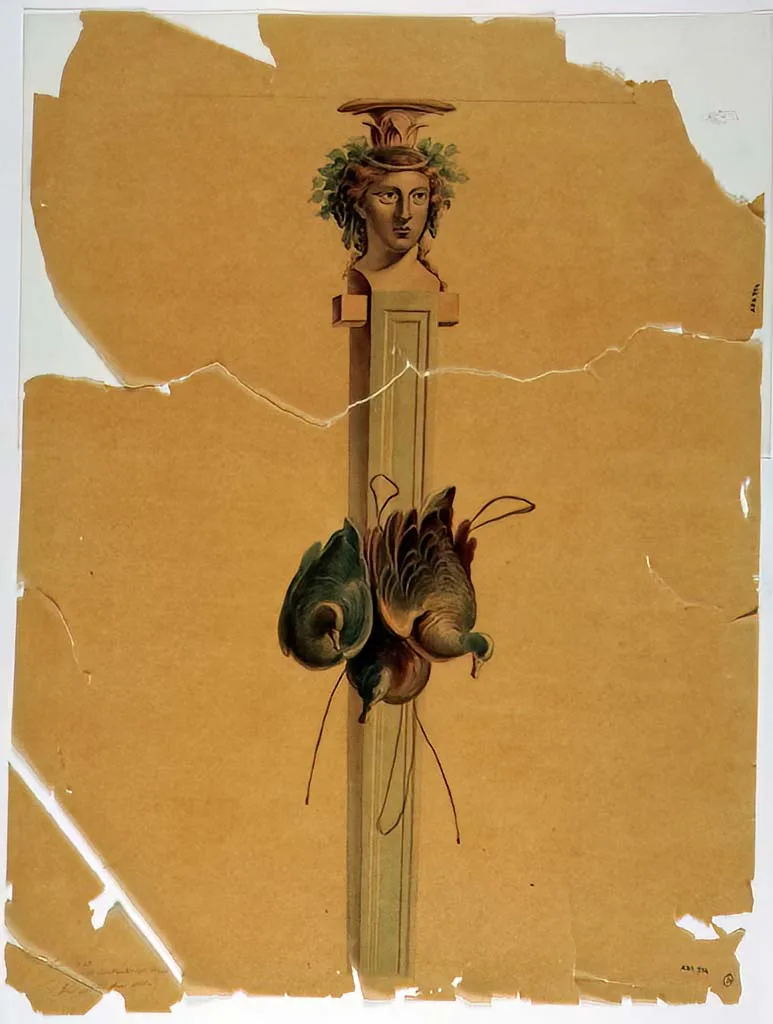
Dionysus
Greek · deity · primordial · Recorded classification
Greek god of wine, ecstasy, theater, and death-rebirth. Twice-born — once from Semele's body before her death by lightning, once from Zeus's thigh after gestation. Foreign-arrival narrative (the god from Phrygia/Thrace coming back to Thebes) is the structural premise of Euripides's Bacchae and central to his cult-iconography. Greek tragedy and comedy were originally Dionysiac ritual.
Parentage
- paternal: Zeus
Children in alternative accounts
- Deianira: Satyrus: transmitted divine ancestrySatyrus, dynastic genealogy preserved in Theophilus, To Autolycus 2.7 (Greek text) (primary)
Domains
- wine intoxication
- ecstatic cult
- theater
- death and rebirth
Powers
- Induce ecstatic madness
- Make wine and vines spring forth
- Transform self and others
Epithets
- Βρόμιος The roaring/thundering one; the ecstatic, noisy godEur. Bacch. 66, 84, 115 (primary)
- Λύσιος The loosener/liberator; releaser from care through wine and ecstasyPaus. 2.7.6; 9.16.6 (Dionysus Lysios) (primary)
- Ἴακχος Iacchus; the ritual cry and processional Dionysus of the Eleusinian mysteriesAristoph. Ran. 316-336; Hdt. 8.65 (primary)
- Διθύραμβος The twice-doored / dithyramb-god (allusion to the double birth)Eur. Bacch. 526-529; Plat. Laws 700b (primary)
- Ἐλευθερεύς Of Eleutherae; the Dionysus brought to Athens whose festival was the City DionysiaPaus. 1.20.3; 1.38.8 (primary)
- Ὠμηστής Eater of raw flesh; the savage Dionysus of the omophagiaPlut. Them. 13; Alcaeus fr. 129 (primary)
- Βάκχος Bacchus; the ecstatic god of the bacchic cryEuripides, Bacchae (passim); Sophocles, Antigone 1121 (primary)
- Εὔιος God of the cry “euoi!”Euripides, Bacchae 566, 579 (primary)
Relations
- spouse: AriadneApollodorus, Bibliotheca (secondary)
- sibling: HebeFull sibling; shares the same complete attested parentage.
- sibling: AresFull sibling; shares the same complete attested parentage.
- sibling: ApolloFull sibling; shares the same complete attested parentage.
- sibling: AeacusFull sibling; shares the same complete attested parentage.
- sibling: AthenaFull sibling; shares the same complete attested parentage.
- sibling: ArtemisFull sibling; shares the same complete attested parentage.
- sibling: HermesFull sibling; shares the same complete attested parentage.
- equated with: Liber PaterRoman Liber Pater is the canonical Latin parallel to Greek Dionysus through interpretatio Romana; the 186 BCE Bacchanalia repression (Senatus consultum de Bacchanalibus) institutionally distinguishes the Roman cult from continuous Hellenic Dionysus-cult.Standard interpretatio Graeca/Romana scholarship; Beard, North & Price, Religions of Rome (1998); Wissowa, Religion und Kultus der Römer (1912) (secondary)
- interpretatio: Liber PaterDionysus ↔ Liber Pater per ancient interpretatio. Roman Liber has Italic agrarian origins (Aventine triad with Ceres and Libera, Liberalia March 17) preceding the Greek equation; the Bacchanalia of 186 BCE shows the Senate suppressing the Greek-derived ecstatic cult while keeping Italic Liber.Cic. Nat. D. 2.62; Aug. CD 6.9 (primary)
- equated with: OsirisDionysus ↔ Osiris per Greek Hellenistic-era interpretatio Aegyptiaca. Both are dying-and-rising gods; the Orphic Zagreus-dismemberment narrative parallels the Osirian dismemberment by Set.Hdt. 2.42, 2.144 (the Egyptian Dionysus = Osiris); Plut. De Iside 13, 35-36 (primary)
- interpretatio: OsirisHerodotus and Plutarch flatly equate Osiris with Dionysus. Preserves the dying-rising pattern and phallic procession Hdt himself notes; breaks on Osiris's role as static dead king vs Dionysiac ecstasy.Herodotus, Histories 2.42, 2.144 (primary); Plutarch, De Iside et Osiride 35 (primary)
- interpretatio: The Thracian Dionysus, Lord of the Mountain FrenzyGreeks read the Thracian mountain-ecstatic as Dionysus; his Pangaion-region oracle rivals Delphi in Hdt's telling. Preserves frenzy and prophecy; the native god's fox-skin and oracle-lordship are distinct.Herodotus, Histories 5.7, 7.111 (oracle of Dionysus among the Satrae) (primary)
- interpretatio: SabaziosDiodorus makes Sabazios an 'older Dionysus'; Strabo ties his rites to the Bacchic. Preserves ecstatic night-rites; breaks on Sabazios's horseman-sky-father nature, which Greeks also read as Zeus.Diodorus Siculus 4.4.1 (primary); Strabo, Geography 10.3.15 (primary)
- interpretatio: DusharaHesychius glosses Dusares as the Nabataeans' Dionysus; wine-god reading fits Nabataean viticulture. Breaks on Dushara's aniconic betyl cult and supreme dynastic role, which Greeks elsewhere read as Zeus.Hesychius, Lexicon s.v. Δουσάρης (primary); J. F. Healey, The Religion of the Nabataeans (2001) (secondary)
- child (dynastic pedigree): DeianiraNamed child in the Satyrus pedigree; this claim does not alter conventional default parentage.Satyrus, dynastic genealogy preserved in Theophilus, To Autolycus 2.7 (Greek text) (primary)
- ancestor of: Ptolemy I SoterThe transmitted Satyrus pedigree is available as a complete selectable claimed ancestry account. It is not independently established biological history.Satyrus, FGrH 631 F 2, preserved in Theophilus, To Autolycus 2.7 (primary)